



 Vocational Education Needs Stable Frameworks to Keep Pace With Tech Changes, Pearson Exec Says
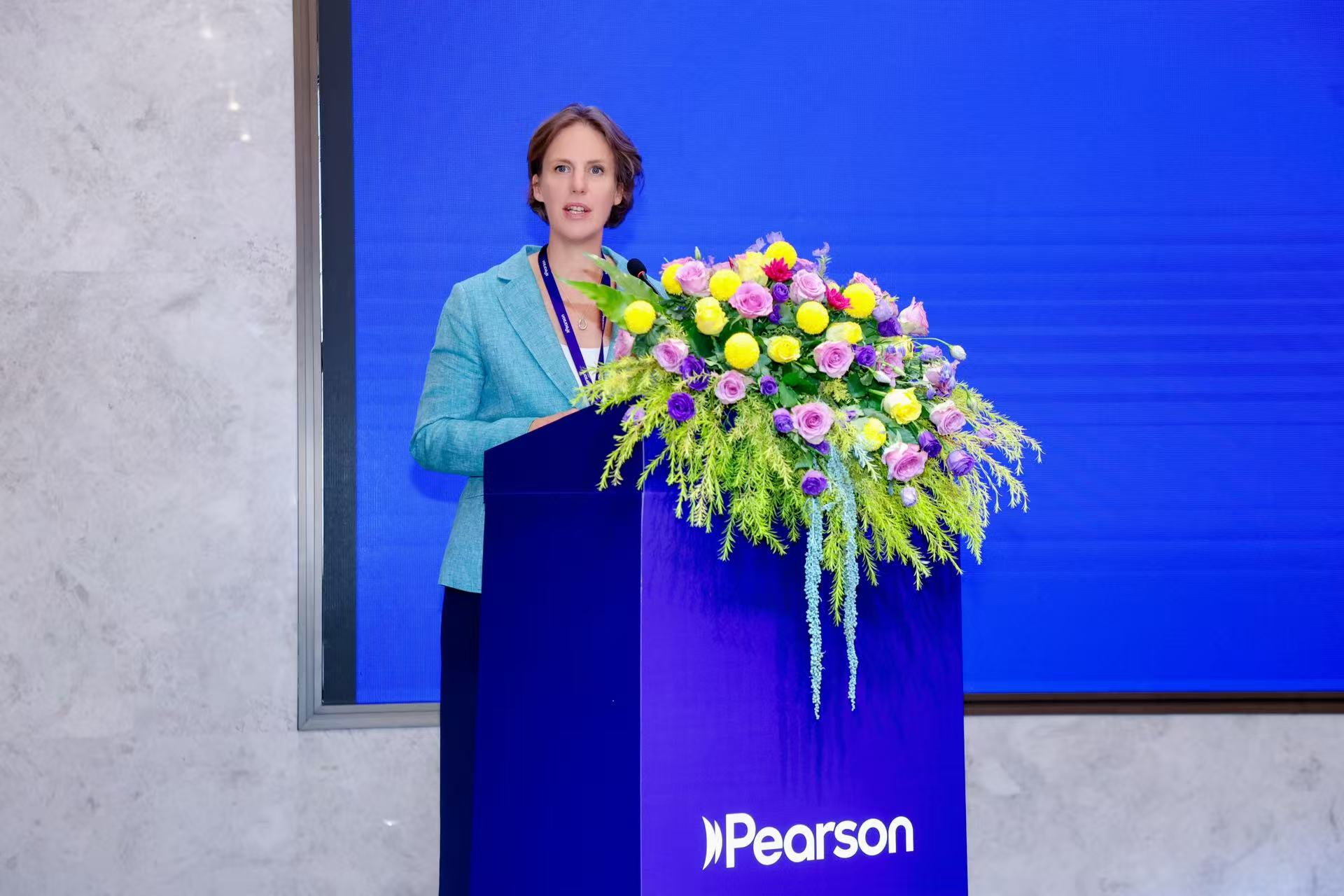
(Yicai) Sept. 23 -- Keeping pace with rapid technological changes and evolving skills requires stable standard frameworks, such as the Business and Technology Education Council qualifications, according to Freya Thomas Monk, Managing Director of Vocational Qualifications at UK education giant Pearson.
“Technology changes every two days,” Monk told Yicai during BTEC Connect 2026 in Shanghai yesterday. The discussion took place as the 48th WorldSkills Competition was being held in the city, with 1,385 competitors from 68 countries and regions participating, both figures setting new records.
Changes in the competition's skills categories also reflect industrial transformation, from traditional skills, such as carpentry and bricklaying, to emerging fields like drone applications, digital media, and smart security.
Together with the Beijing Human Resource Service Industrial Association and a research group from Beijing Forestry University, Pearson yesterday released a report titled “Cultivation of International-oriented Skilled Talents and Industry-Education Integration” at the BTEC Connect 2026 conference in Shanghai.
The report found that a growing gap is emerging between companies' talent requirements and existing training models, and the match rate between vocational college majors and industrial demand is about 65 percent.
Strengthening school-enterprise cooperation is an important way to bridge the gap between talent development and industrial demand, said Shen Zhiyu, Secretary General of the Beijing Human Resource Service Industrial Association.
“We need to move beyond fragmented cooperation and build more sustainable partnerships that connect vocational education more closely with real workplace needs,” said Shen Zhiyu, secretary-general of the Beijing Human Resource Service Industrial Association.
Companies update their equipment and production processes roughly every one to one and a half years, while vocational colleges often run training programs from three to five years prior, the report showed, identifying other shortcomings in English proficiency and cross-cultural adaptability.
"While technology changes rapidly, vocational education should be built on enduring skills and standards that can evolve alongside new developments," Monk pointed out.
Under the BTEC framework, technologies for specific industries can be adjusted as market conditions change, while the knowledge, skills, and competencies students acquire remain relatively stable, she explained. This lets educational institutions update teaching content based on industry practices without frequently changing the underlying qualification standards.
Keeping teachers up to date with technological changes is another challenge vocational education faces. The key is to ensure that teachers have the knowledge, tools, and technology needed to deliver instruction, while helping learners understand the impact of technology on their chosen industries, Monk said. “We must all focus on supporting the teachers and educators through this change.”
Beyond technical skills, companies are also placing more and more importance on workers' broader international capabilities, including adaptability, problem-solving, and cross-cultural collaboration, according to the report.
“I would love to see every young person confident that they have technical vocational skills plus the human skills of teamwork, problem-solving, and creativity, because together that is what will drive their success,” Monk noted.
Combining technical skills with transferable capabilities can help learners respond to changes in future working environments, she said, adding that international standards also need to be aligned with local industry requirements. “Standards and benchmarks only work and are useful if they really meet the needs of local employers and local economies.”
During BTEC Connect, Pearson also signed a memorandum of understanding with the Northern International Testing Centre (NITC) to deepen cooperation in areas including vocational skills certification, digital credentials, and international vocational education.
Editor: Futura Costaglione