




 To Address Global Economic Imbalances, We Should Not Just Focus on Trade Issues
[Yicai Global is committed to providing an open forum to air a diverse range of views. The opinions expressed herein are the author's alone. Yicai Global has redacted this article to conform to our style and usage guidelines, but neither validates its factual nor endorses its editorial content.]
(Yicai Global) Oct. 23 -- Against the backdrop of reverse globalization or trade protectionism, what should our opening-up policy be in the financial sector? What is the focus of maintaining balance of payments, which is a key topic of reform and opening-up of the financial sector?
The 2017 Jingshan Report, a research report on China's financial industry issued by the China Finance 40 Forum in September, greatly inspires me. An important view of the report is that balance of payments is now dominated by cross-border capital movement, rather than current account. Data support such view. For example, the differences in current account and in capital account and their respective share of foreign exchange reserves attest to this.
We should realize that against the backdrop of reverse globalization, when talking with other countries about bilateral economic and trade cooperation or discussing global economic imbalances, problems in global economic development and countermeasures in international occasions, only talking trade is not enough: we must talk finance, too.
For example, an important reason for the US trade deficits with China is that the US imposes export restrictions on high-technology products to China. If the US relaxes such restrictions, the trade deficit problem between the two countries can be reasonably solved. Such suggestions are correct. However, they also show that we mainly focus on trade issues. In fact, the US runs deficits with more than 100 countries around the world. It involves not only trade issues but also financial problems as it relates to the US dollar's dominant position in the international money market.
An inspiration of the Jingshan Report is that for a country whose currency is an international reserve currency, if the influence of its currency in the international financial market and the influence of its economy in the global economy is disproportionate to one another, problems will arise. The US dollar, the euro, the UK pound and the Japanese yen have great influence in international forex trading and global capital markets. These four currencies account for about 80 percent of transactions in the bond market alone. In fact, however, the four economies make up just some 50 percent of the world's gross domestic product.
These economies want to maintain their dominant positions in the international financial markets and benefit from seigniorage. However, they also realize that they need to handle global liquidity pressures and the validity of their domestic monetary policies will inevitably come under challenge. The rise of reverse globalization is because these countries feel their monetary policies have become less effective in dealing with domestic economic cycle problems and thus conclude it is due to the impacts of globalization. I believe such understanding is theoretically one-sided and these countries are just considering problems from their own perspectives.
We should learn to state our views from new perspectives to have a bigger say. For example, if the yuan's position as a reserve currency can be further strengthened, it will help address global economic imbalances, optimize the world's international reserve currency structure and solve economic problems facing other countries. Of course, the yuan's share in the international markets is still very small. We will not immediately encounter the kind of problems just mentioned. However, against the backdrop of reverse globalization, we should think about how to deal with reform and opening-up of the financial sector as a comprehensive issue.
It is open to discussion whether lower concentration in the banking sector should be its future direction. In practice, concentration in the global banking industry is increasing after the two financial crises.
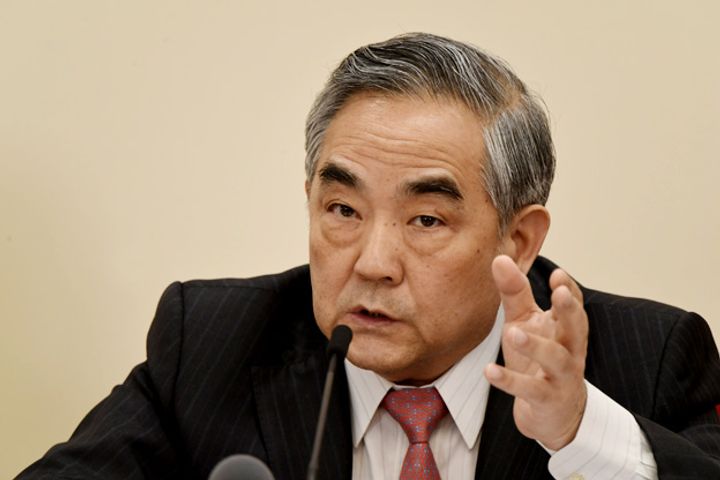
Yang Kaisheng is the former president of Industrial and Commercial Bank of China and an academic counselor at the China Finance 40 Forum.






