



 Same Countries Have Had Major Deficits for 40 Years Due to Int’l Monetary System Flaws, PBOC Governor Says
(Yicai) March 23 -- The same countries have had major deficits over the past 40 years as a result of the inherent faults in the international monetary system, according to the governor of China's central bank.
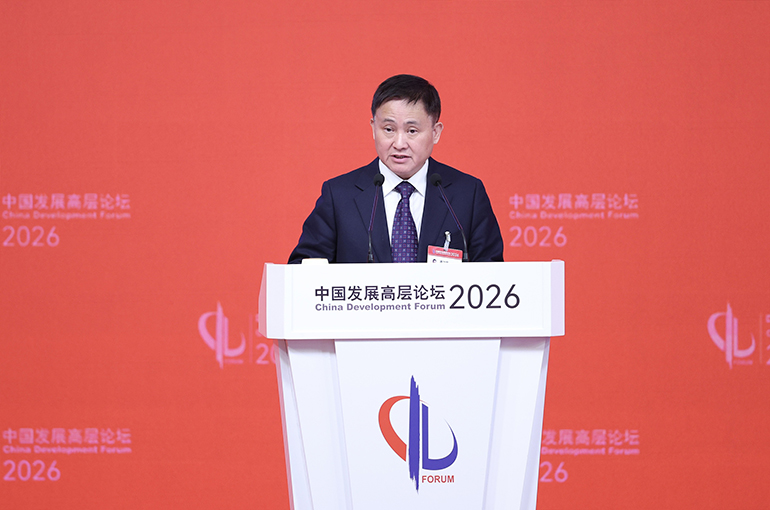
In an international monetary system dominated by a single sovereign currency, the issuer of the primary reserve currency can run a fiscal deficit for a long time at relatively low borrowing costs, exporting its currency through large current account deficits, Pan Gongsheng said yesterday at the China Development Forum.
Continuous capital inflows further contribute to an overvaluation of that primary reserve currency, which erodes the issuer's manufacturing competitiveness, Pan explained in a speech titled 'China's High-Quality Development and Global Economic Rebalancing.’
The global economy has gone through three dynamic rebalancing cycles since the beginning of this century, according to Pan. The first was between 2001 and 2007, after China joined the World Trade Organization, the second was from 2008 to 2017, following the global financial crisis, and the third arrived in the aftermath of the Covid-19 pandemic.
China has also undergone profound structural adjustments, Pan noted. The contribution of consumption to growth in gross domestic product rose to 52 percent last year from 37 percent in 2010, and the share of the country's current account surplus to GDP fell to an average of less than 2 percent over the past decade from around 10 percent in 2007.
China's industrial competitiveness boasts four key strengths, he noted. They are a vast domestic market, a comprehensive industrial and supply chain ecosystem, a skilled workforce of more than 72 million, and a sustained increase in research and development spending. China's expenditure on R&D ranked second globally last year, with R&D intensity exceeding the average among members of the Organization for Economic Cooperation and Development.
In response to external accusations that China's competitiveness stems from unfair government subsidies, Pan invited skeptics to visit China more often, which would help them acquire a more accurate and complete understanding of the country’s industry.
It is important to look beyond economic factors and pay attention to non-economic factors as well, Pan pointed out. Last year's tariff and trade wars triggered a rush to export, and an expanding definition of national security led to more export controls, which affected expectations of businesses and households, disrupting the global economic balance, he added.
Stable, rational, and predictable cooperation is especially precious at this moment, when trade fragmentation is undermining the foundations of free trade, Pan said. “We need to more resolutely oppose all forms of trade protectionism, consolidate and develop the WTO-centered, rule-based multilateral framework and international trade order, and advance an inclusive and equitable economic globalization,” he said.
Editor: Futura Costaglione