


 Chinese, German Firms Eye Tieups on AI, Robotics, and Smart Manufacturing at Matchmaking Event
(Yicai) Oct. 20 -- Representatives of companies, industry associations, and research institutions from Germany's eastern Saxony state met with counterparts from Chinese firms at a matchmaking event in Shenzhen's Futian district to explore collaborating in robotics, industrial automation, industrial artificial intelligence, and advanced manufacturing.
Tech tie-ups, joint research and development, supply chain alliances, and expansion into the European market were among the main topics at the Global Connect Show Sino-German Robotics & Intelligent Manufacturing Business Matchmaking Event on Oct. 16, held ahead of the 2026 Asia-Pacific Economic Cooperation meeting in Shenzhen.
The event was organized by global business and communications consultancy iMpact and OrinTent, which helps international businesses navigate European Union regulatory requirements, with Saxony Trade & Invest as co-organizer and Yicai, Yicai Global, and Inside Digital as media partners.
This was the first time since IFA last month that iMpact met German businesses again, said founder and Chief Executive Chris Pereira, adding that he was glad to welcome the delegation of German entrepreneurs from Saxony to Shenzhen and hoped all parties would benefit from the exchange.
Chinese innovation is no longer a guest in Europe but stands at center stage, noted Leif Lindner, CEO of IFA Berlin. The key to China-German tech partnership is no longer whether to ally, but how to create synergies, he pointed out.
German representatives presented Saxony's industrial strengths and needs for global cooperation during a session promoting the state's industries. Uwe Lienig, chief operating officer of Saxony Trade & Invest, said the organization is interested in applying Chinese-developed solutions in German sectors.
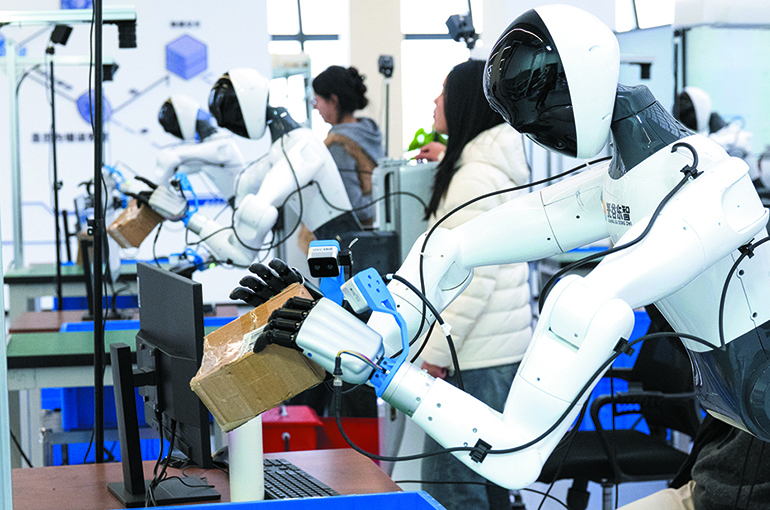
Embodied intelligence and humanoid robots were also among the topics of interest at the event. Shanghai Longcheer Robotics Technology presented its business layout, which covers robot R&D and manufacturing, as well as AI software and system integration for scenarios including precision assembly, automated inspection, and flexible logistics.
Market access and regulatory compliance are key considerations for Chinese companies planning to expand into Europe. In-person exchanges help build trust between Chinese and German firms, said Dai Weiyu, managing partner of OrinTent.
The GCS team stressed it will continue to follow up on key cooperation leads after the event and help companies explore joint R&D, pilot projects, and long-term business cooperation.
Editor: Martin Kadiev