



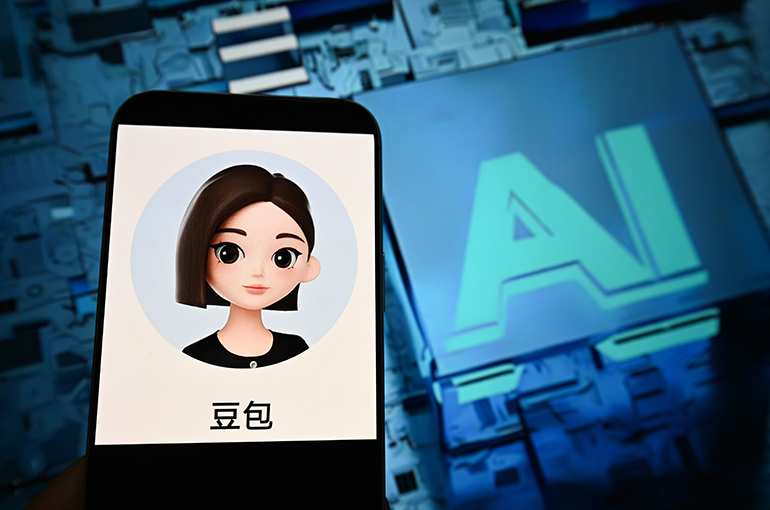
 ByteDance's Doubao Phone Assistant Faces Resistance From WeChat, Taobao, and Dozens of Other Apps
(Yicai) Oct. 15 -- More than 150 apps, including WeChat and Taobao, have declined to let ByteDance's Doubao Phone Assistant run them, exposing a major obstacle to the development of artificial intelligence agents that perform tasks across different mobile apps.
Video game Honor of Kings, payments system Alipay, and AI models DeepSeek and Kimi are also among the 151 apps that have refused permission for Doubao Phone Assistant, a system-level graphical user interface agent, to autonomously execute tasks, the AI agent announced yesterday.
The 30-day public notice period for its Screen Automation Execution Protocol has ended, the agent said, revealing the latest list of apps that have opted out. The assistant will gradually expand its screen automation capabilities to third-party apps, but will not operate apps that have explicitly declined permission, it noted.
AI agents are designed to carry out tasks on a user’s behalf across multiple apps, but they cannot do so reliably if individual app developers block them from interacting with their apps.
The list, which is updated every Wednesday, covers apps on two smartphones, the Nubia M153 and Nubia NaviX Ultra. By ecosystem, it includes 65 apps affiliated with Tencent Holdings, 23 with Alibaba Group Holding, 14 with short-video platform operator Kuaishou Technology, and 11 with lifestyle service provider Meituan. It does not disclose the reasons for each app’s decision.
Other entries include smart home security brand Ezviz and affiliated apps, banking apps from China Merchants Bank and Industrial and Commercial Bank of China, and those of China's three major telecoms operators -- China Mobile, China Unicom, and China Telecom. In addition to DeepSeek and Kimi, other AI apps on the list include Tencent’s Yuanbao, Alibaba’s Qwen, and Kuaishou’s Kling AI.
SAEP allows developers to specify whether an AI agent may operate their services at the app, individual page, or intended action level, and can submit a form or email Doubao to configure permissions on their behalf. Developers can still decline permission after the consultation period, with Doubao saying it will respond within three working days.
ByteDance’s Doubao team developed the phone assistant in collaboration with smartphone manufacturers at the system level, with Nubia as its project partner. It introduced the M153 engineering prototype last December and launched the NaviX Ultra on Sept. 16, with Doubao leading the assistant’s user experience and Nubia handling hardware development and manufacturing.
The assistant had already run into security and risk-control issues involving other apps. Early last December, M153 users reported that using it to run WeChat caused the messaging app to quit unexpectedly. A WeChat representative said there had been no specific action on its part, noting that the issue may have triggered existing security controls.
On Sept. 24, NaviX Ultra users reported receiving device-environment warnings and being forcibly logged out when signing into Honor of Kings. A day later, Doubao Phone Assistant said it had not performed any operations on Tencent’s game systems and was communicating with the tech giant, but had not yet received a clear response. The cause of the issues remains unconfirmed.
Editor: Martin Kadiev