



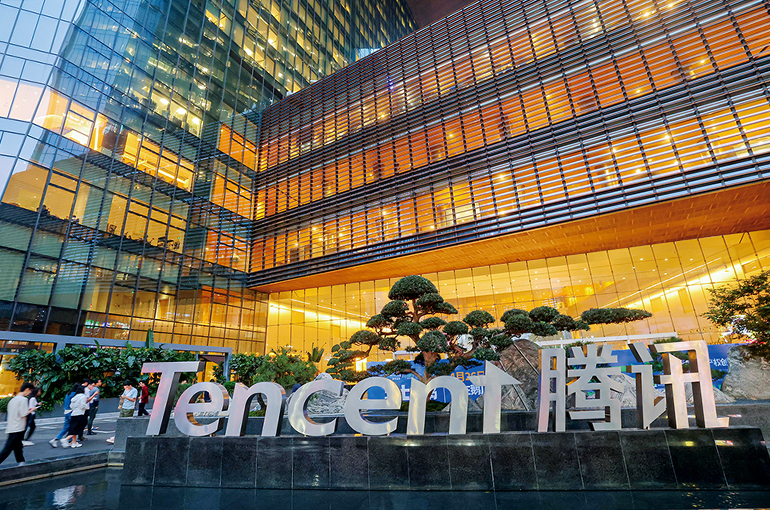
 Tencent, Other Chinese Tech Stocks Drop After VAT Hike Rumor
(Yicai) Feb. 3 -- Chinese technology stocks retreated in Hong Kong, with Tencent Holdings among the biggest decliners, following speculation of an increase in value-added tax on internet firms. Tax experts said the rumor is unfounded and VAT rates are unchanged.
Tencent [HKG: 0700] closed 2.9 percent lower at HKD581 (USD74.36) per share today, recovering a little from a morning drop of as much as 6.3 percent. The Shenzhen-based firm’s stock has now fallen for more than four straight months.
Alibaba Group Holding [HKG: 9988] fell 1.4 percent to HKD161; Baidu [HKG: 9888] shed 3.6 percent to HKD141.40; Bilibili [HKG: 9626] gave up 2.5 percent to HKD253; and Kuaishou Technology [HKG: 1024] sank 4.6 percent to HKD73.45.
China’s new VAT Law came into effect on Jan. 1, aiming to clarify the tax and keeping key rates unchanged. The Ministry of Finance and the State Taxation Administration have since rolled out a series of supplementary rules, with the VAT rate for services including internet broadband access rising from 6 percent to 9 percent.
This triggered speculation that the rate applicable to the core businesses of internet companies, including Tencent, might also be raised.
But several senior tax experts told Yicai that Tencent’s core businesses mainly fall under the provision of value-added telecoms services and the sale of intangible assets, both of which are subject to a 6 percent tax rate.
According to currently disclosed VAT regulations, the rates remain at 6 percent, with no changes, the experts noted.
Tencent’s shares have fallen below HKD600 on concern about its high spending on artificial intelligence and uncertainty over short-term monetization, alongside the weaker-than-expected performance in some of its January indicators, according to Pan Jun, an investment manager at Guangdong Cheese Investment Fund.
Another factor is the red envelope promotional campaign for Tencent’s AI app Yuanbao. Red envelopes, or hongbao in Chinese, are a traditional way of gifting cash in China, particularly during major holidays. Tencent’s planned cash handouts have attracted a lot of attention, but the campaign was also interpreted by the market as a sign of a new round of cash-burning competition.
There are concerns that Tencent could be drawn into such a battle, and even though its market value has fallen and offers defensive characteristics, the stock lacks near-term catalysts for a rebound.
Giving out red envelopes lifts customer traffic in the short term, but investors are more interested in user retention and AI stickiness, rather than daily active user numbers, Wen Tianna, executive director of Partners Capital International, told Yicai. Fierce AI competition among Chinese internet giants has also further increased the pressure on margins, leading to short-term risk aversion, Wen noted.
Editor: Tom Litting