




 Home Appliance Firms in China’s Pearl River Delta Raise Skilled Worker Salaries by About 10% to Lure Youngsters
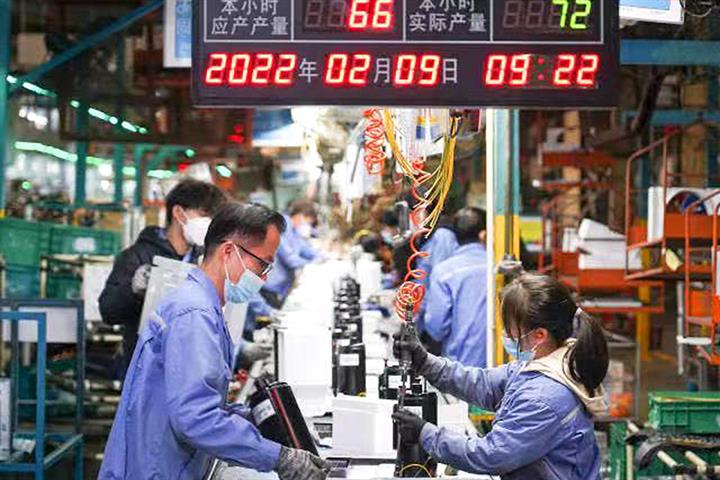
(Yicai Global) Feb. 17 -- Chinese home appliance makers with large factories in China's Pearl River Delta region are raising the salaries of frontline skilled workers by about 10 percent this year to attract younger people as the manufacturing workforce ages, Yicai Global learned.
The Midea Group plant in Guangzhou that makes air conditioners for the home market sweetened salaries to boost recruitment around the time of the lunar new year holiday, offering CNY5,000 to CNY7,000 (USD790 to USD1,100) a month, plus other incentives such as a joining fee of CNY1,500.
The plant lifted payments twice last year and has raised them by about 10 percent so far this year, Foshan-based Midea told Yicai Global, adding that it will absorb the higher labor costs by improving production and operation efficiency.
Galanz Group is offering a monthly salary for frontline skilled workers of up to CNY8,500 (USD1,350), according to job vacancies it posted on WeChat on Feb. 8.
Home appliance sales jumped 20 percent during the lunar new year from a year earlier, Galanz noted, adding that workshops have been operating at full capacity and advanced their capacity expansion plans since the firm resumed work on Feb. 7. Most factories in the Pearl River Delta region reopened on Feb. 15.
But small and mid-sized appliance manufacturers are struggling with a lack of orders. One such company based in the region said that only 60 percent of staff had returned to work after the holiday and it is proving hard to recruit young people.
The cost of paying frontline workers rose 10 percent from last year because large firms have made their salaries more attractive, Xiao Youyuan, chairman of Zhuhai Sanyou Environmental Technology, told Yicai Global. Concerned about the demands of production line work, many young people shun manufacturing jobs in favor of work in the service sector, he added.
Sanyou plans to improve product design along with its manufacturing techniques and processes to reduce the number of workers, without having to switch to automation equipment, Xiao noted.
Editor: Futura Costaglione






