



 Forex Losses Squish First-Half Earnings at Listed Chinese Firms
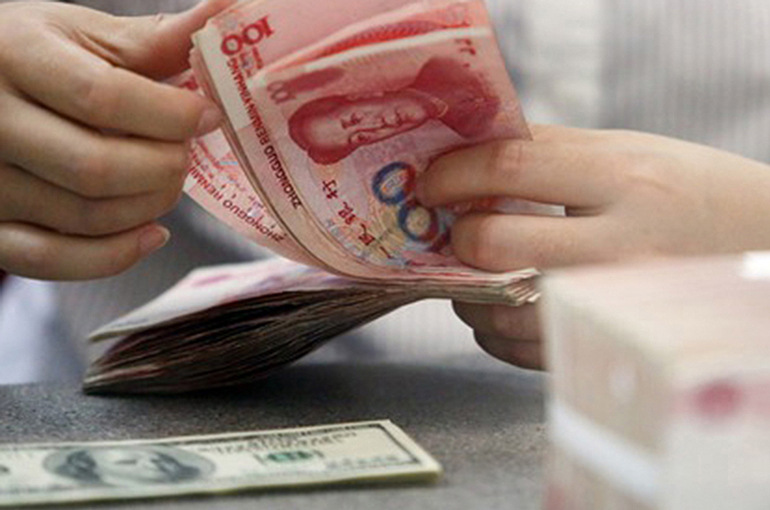
(Yicai) July 23 -- Many publicly traded Chinese companies expect earnings to have declined in the first half of the year, mainly because of foreign exchange losses resulting from the Chinese yuan’s appreciation against the US dollar and the euro.
About 130 firms listed in the Chinese mainland have cited forex losses in their first-half guidance, according to Yicai’s calculations. Many exporters expect revenue to have increased but not profit because of yuan gains.
For example, Linglong Tire predicted an 87 percent decline in net profit to CNY110 million (USD16.2 million) for the six months ended June 30 from a year earlier, mainly because of forex losses, the tire manufacturer said.
The willingness among companies to actively manage exchange rate risk has continued to increase in response to the operating pressures created by exchange rate swings, Li Bin, deputy director of the State Administration of Foreign Exchange, has said.
Official figures show a significant rise in demand for risk hedging. The value of contracts signed by Chinese companies using forex derivatives to manage exchange-rate risk approached USD1.4 trillion in the first half, a 40 percent increase from a year ago, while their forex hedging ratio rose to 35 percent from 30 percent last year. Moreover, about 30 percent of cross-border trade settlements were done in yuan during the first five months of the year.
For a long time, the market has generally believed that hedging tools, including forward forex contracts and options, can help companies lock in exchange rate risk. But as corporate hedging ratios continue to rise, a large number of listed companies are still suffering forex losses.
Hedging tools can offset only part of a company’s foreign exchange risk exposure, said Zhao Qingming, vice president of the Huiguan Information Technology Research Institute. Even if importers and exporters establish a complete hedging system, they still cannot completely eliminate risk.
This means that they must continuously improve their risk control systems and focus management on risk exposure rather than on swings in exchange rates, Zhao explained.
As Chinese firms further expand their overseas business, exchange rate management is set to evolve from financial hedging —primarily relying on forex derivatives — toward a systematic framework characterized by matching the currencies of assets and liabilities and the natural hedging of revenues and costs, said Zhang Yu, chief economist at Huachuang Securities.
Editor: Futura Costaglione