



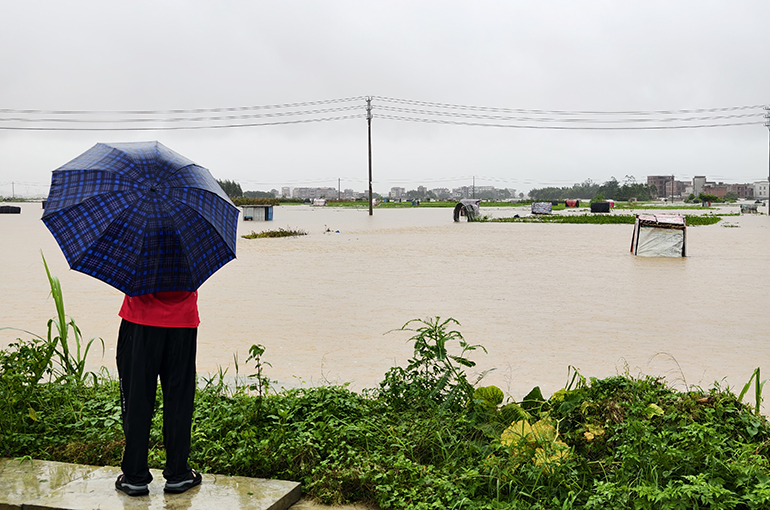
 Flooding Besets World's Top Jasmine Flower Growing Region in Southern China
(Yicai) July 8 -- Severe floods triggered by Typhoon Maysak have struck China's southern Guangxi Zhuang Autonomous Region, including the city of Hengzhou, which accounts for 60 percent of the world’s jasmine flower production, raising concerns about disruptions to the key ingredient used in floral teas and other beverages.
Floodwaters have inundated a number of jasmine plantations in Hengzhou, mainly in low-lying areas, Yicai learned from agricultural producers yesterday. Plantations at higher elevations and with better drainage were unharmed.
With the arrival of Typhoon Maysak, a destructive tropical cyclone, Guangxi has had continuous heavy rainfall and flooding since July 3. As of 8 p.m. yesterday, six people were confirmed dead as a result, with 11 individuals still missing, according to local authorities. About 375,000 local inhabitants were affected, 130,000 of whom were quickly relocated.
Jasmine flowers are a main ingredient in floral teas in China, but they are also used in the food and pharmaceutical industries. Hengzhou’s jasmine industry chain was worth more than CNY19 billion (USD2.8 billion) last year, according to local agricultural authorities.
It is difficult to assess the size of the planting area impacted by the flooding, a spokesperson for a local plantation told Yicai. If the plants are only exposed to standing water for a short period, production can resume in about a month, but if they are submerged for an extended period, it can cause them to wither and die, the person explained.
Luckin Coffee's jasmine flower production base in Hengzhou has been affected, China's largest coffee chain told Yicai yesterday, adding that it has partnered with the China Foundation for Rural Development to urgently donate supplies to the affected areas, supporting front-line rescue efforts and the relocation of residents.
Meanwhile, tea beverage chain Chagee Holdings told Yicai that the floods have not significantly impacted its raw material supply. The company said it will closely monitor the disaster relief efforts and activate contingency plans based on the local situation, if necessary.
The flooding could exert some upward pressure on jasmine prices in the near term, but a major price surge is unlikely, the spokesperson noted. Because the plants have been flowering since April, processors had already built up substantial inventories before the flooding. Existing stockpiles should allow companies to maintain stable deliveries to customers.
Production had been projected to increase this year, pushing down prices. Prices may now stay at last year's levels, according to the spokesperson.
Editors: Dou Shicong, Futura Costaglione