



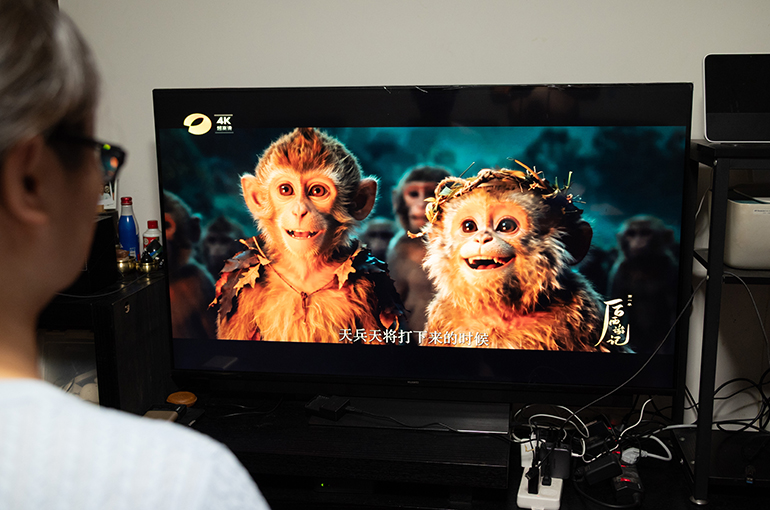
 AI Dramas Come to Mainstream TV in China
(Yicai) Sept. 4 -- Artificial intelligence-generated dramas, which have taken Chinese video apps by storm, have made the jump from online platforms to mainstream television as AI reshapes China’s movie and TV production industry.
After the “Tale of Peach Blossom Pond,” China’s first fully AI-generated television costume drama, premiered on Anhui Satellite TV in July, AI shows have begun airing more widely on other channels. They include “Journey to the West: The Sequel,” broadcast on both Hunan Satellite TV and Mango TV, as well as “Yes, Boss,” which is being shown by Television Broadcasts (TVB).
Mango TV, which produced “Journey to the West: The Sequel,” said at an investor relations event on Sept. 2 that compared with traditional live-action dramas, the production changes are structural, and the total cost is much lower than for similar dramas.
The show’s first batch of merchandise sold out, with more new products already on sale, thereby expanding the intellectual property's derivative value, Mango TV noted.
TVB, a leading film and TV producer based in Hong Kong, signed a memorandum of understanding with ByteDance’s cloud computing unit Volcano Engine in June to use Doubao’s video generation model Seedance 2.0 for intelligent content production, digital production of short dramas, exploration of IP commercialization, and cloud infrastructure development.
“There’re short dramas on the market that are somewhat homogeneous,” Lu Silin, director of TVB Plus and FF Studio, said in a recent interview with Yicai. “But we believe we still need to make high-quality productions, even if that means spending somewhat more.”
TVB deliberately hires professional voice actors to dub its AI dramas, in an effort to convey a sense of commitment and sincerity to viewers, Lu noted.
In 2019, well-known Hong Kong cartoonist Feng Zhiming authorized Shenzhen Mali Technology to develop a special effects film based on the Swordsmanship IP. But with the rise of AI, Mali’s Chief Executive Ma Wenxian pivoted the project in 2024 from being just a single special-effects movie toward the development of an entire IP universe.
This July, Mali launched “Magic Swordsmanship: Intelligent Future,” an AI animated film project that uses Alibaba Cloud’s AI video creation platform WonderClip and adopts AI from creative conception to final film production. It is also the first AI animated film in Hong Kong involving high school students in some of the main creative positions.
“I’m perhaps the first person in Hong Kong to teach students how to make animations with AI,” Ma said. “It takes students three to four months to learn basic operations with existing digital software, but by using AI software it takes only two or three classes for them to create movies with story content.”
Challenges and opportunities brought by AI to the movie and TV industry are two sides of the same coin, a screenwriter told Yicai. Before the emergence of AI, screenwriters and editors had relatively stable job opportunities. But now, AI is helping practitioners become producers to some extent.
“In the past, it was difficult to implement your creative ideas due to various considerations, processes, and unexpected events,” the person noted. “But now it’s much simpler, as AI helps you change your inspiration into work and analyze view counts in a few days to tell you whether your work is popular or not.”
Editor: Futura Costaglione