



 Chinese Innovative Drugs’ Int’l Growth, Marketing Still Need Progress Despite Rising Outbound Licensing
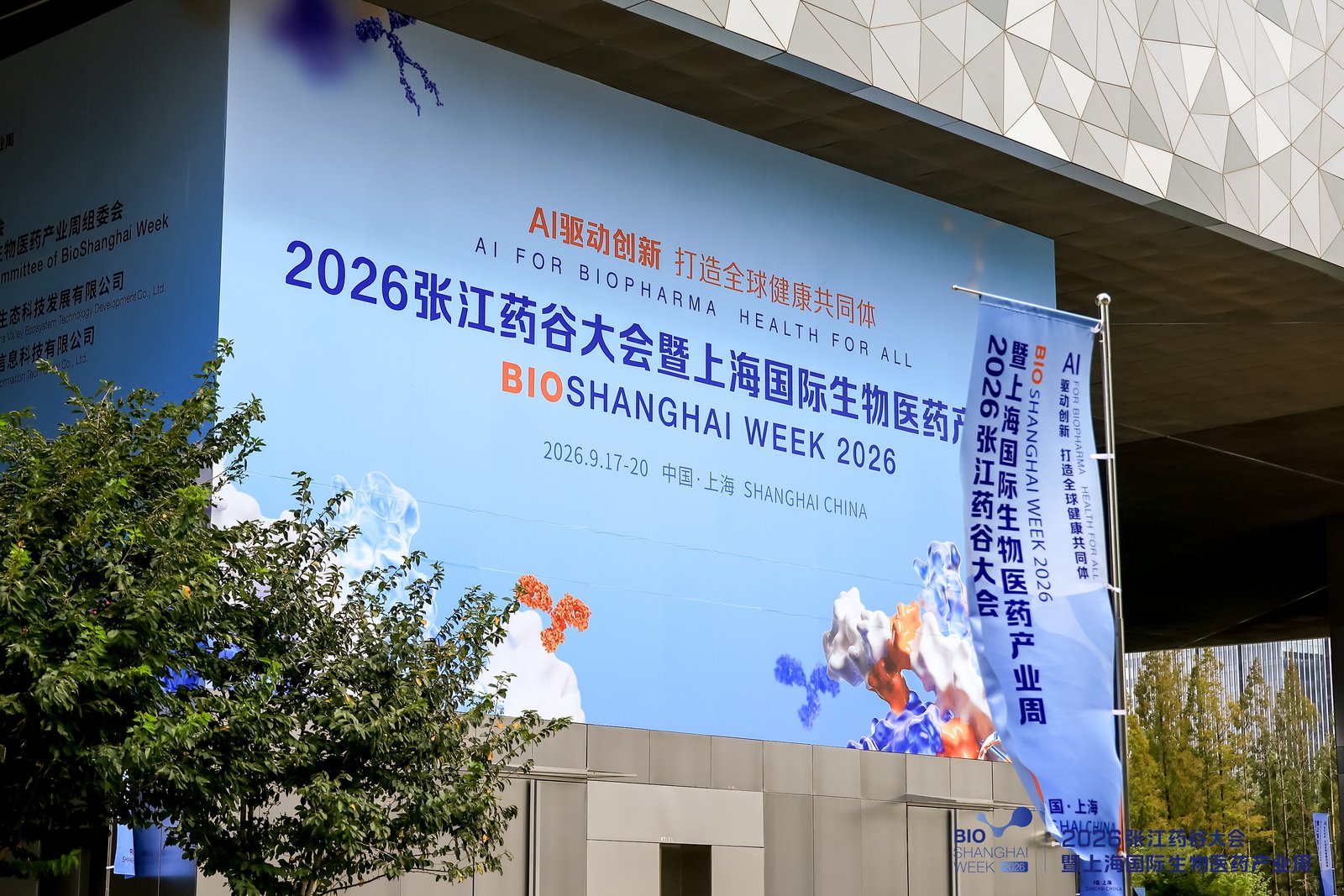
(Yicai) Sept. 21 -- More and more outbound licensing deals over Chinese innovative drugs are being signed, but their global development and commercialization capabilities remain weak, according to experts. How Chinese pharmaceutical firms can engage in global clinical development, regulatory registration, and marketing was a key topic of discussion at BioShanghai Week 2026.
There are five ways for Chinese drugmakers to go global, according to Jimmy Zhang, mentor at Bakar Bio Labs, an incubator for life-science startups. They are outbound licensing, establishing new joint ventures, co-development and commercialization, building a global commercialization system independently, and integrating overseas assets through mergers and acquisitions.
Chinese pharmaceutical firms signed 81 licensing-out deals worth about USD110 billion in the first half of the year, according to data from the National Medical Products Administration. As of Sept. 14, the value of such deals had surpassed USD120 billion, up 36 percent from a year earlier, with upfront payments exceeding USD10 billion.
The internationalization of Chinese drugmakers still relies heavily on outbound licensing, said Li Yan, deputy director of industrial economics at the Development Research Center of the State Council. However, their ability to independently conduct global multi-center clinical trials, overseas registration, and channel development remains relatively weak, he noted.
Capital expenditure and commercial insurance payments are key to ecosystem operations, Zhang said, adding that the Chinese government should support local pharmaceutical companies in building sales teams in Europe and the United States through tax incentives and funds.
Of the licensing-out deals signed by Chinese firms, 62 percent involved global licensing, and 79 percent established a co-development mechanism, said Xu Ming, director of the global health department at Peking University School of Public Health. However, only 7.1 percent of these deals include deep equity binding.
Multinational drugmakers are deepening ties with Chinese innovators too, said Yin Yuexiang, head of Greater China strategy and business development at IQVIA, speaking at a forum hosted by the Shanghai Foreign Investment Association. Cooperation is shifting from simple licensing deals toward strategic co-development and even fund models that bring multinationals in at the incubation stage, he said, with Chinese teams increasingly becoming part of global innovation decision-making rather than just executing on assets handed to them.
The value of pipelines and patents changes over time, Shao Liming, professor at Fudan University School of Pharmaceutical Sciences and director of the Shanghai Center for iDrug Discovery and Development, told Yicai. If a company has limited marketing capabilities or funds, it is a commercially logical choice to license assets to partners to generate cash flow for subsequent research and development, he added.
"Relying on the government to fully buy out your seedlings is neither reasonable nor realistic," Shao noted.
Regulation, Market Structure as External Risks
A large proportion of Chinese firms’ outbound licensing partners are focused on one single overseas market, Xu said. As they explore global development and commercialization, the foreign regulatory environment is one of the most important factors they need to account for, he added.
On April 29, the US House Committee on Appropriations passed a bill for fiscal year 2027, prohibiting the FDA from accepting, reviewing, or considering any covered clinical data generated by a clinical investigation site located in a covered nation, such as China, Russia, Iran, and North Korea, in support of an investigational new drug application. The bill has not yet become a formal regulation.
“The fundamental solution to mitigating external risks lies in advancing higher-level institutional opening-up, leveraging institutional advantages to shape a competitive edge in international cooperation," Xu believes.
Localized Operations and Platform Cooperation
In addition to licensing-out and joint development, some Chinese pharmaceutical companies are also enhancing their operational capabilities in foreign markets by establishing local teams and commercialization networks.
Over the past five years, Shanghai Pharmaceuticals Holding has gradually set up teams and subsidiaries in the Philippines, Vietnam, Thailand, Indonesia, and Malaysia, adopting a “localization first, scaling-up second” approach, said Yan Jun, general manager of the company's international business division.
Regulatory registration is just the starting point for drugs entering a foreign market, Yang explained. For products to be included in hospitals and health insurance systems and gain popularity among doctors and patients, long-term channel development and investment in academic promotion are also required, he noted.
Platforms are another must in Shanghai Pharma’s internationalization model, Yang pointed out. Placing products and pipelines from different companies without commercial conflicts into the same local channels and marketing system can help lower barriers for a single product, he added.
Shanghai Pharma has partnered with several leading Chinese peers that have been deeply engaged in overseas markets for a long time, exploring synergies between product portfolios and local marketing systems, Yan disclosed.
At the policy level, efforts are underway to promote the participation of China's pharmaceutical industry in the global division of labor. The 15th Five-Year Plan for Pharmaceutical Industry Development issued on Sept. 18 proposed that Chinese innovative drugs will account for one-quarter of the global total by 2030, with at least five drug varieties achieving annual sales of over USD1 billion globally.
The plan also pledged to support enterprises in participating in the global division of labor through joint R&D and commercialization and to encourage international multi-center clinical trials and international registration.
Editor: Futura Costaglione