


 Chinese AI Startups MiniMax, DeepSeek, Moonshot Face Distillation Accusations, Peer Zhipu Hit by GPU Crisis
(Yicai) Feb. 24 -- Major Chinese artificial intelligence startups MiniMax, DeepSeek, and Moonshot AI have been accused of conducting distillation attacks by US rival Anthropic, while their peer Knowledge Atlas Technology Joint Stock, better known as Zhipu AI, has called for help amid computing resource issues.
MiniMax, DeepSeek, and Moonshot had conducted "industrial-scale distillation attacks" on Anthropic's Claude models, creating over 24,000 fraudulent accounts and generating more than 16 million exchanges to extract capabilities for training their models, the California-based company said on X today.
Share of MiniMax [HKG: 0100], which went public on Jan. 9, surged 5.5 percent to HKD886.50 (USD113.36) apiece as of 11.05 a.m. in Hong Kong today. The stock plunged over 13 percent yesterday after peaking at HKD970 on Feb. 20.
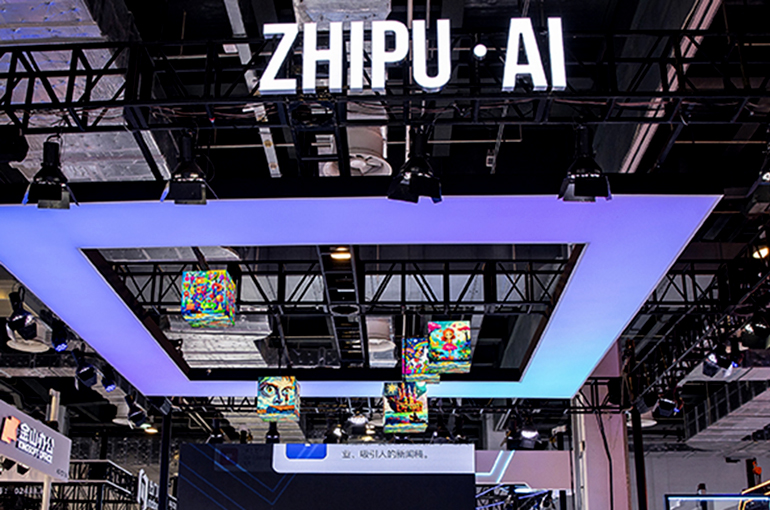
On Feb. 21, Zhipu called for support from Chinese and global graphics processing unit providers after the launch of its flagship GLM-5 model, admitting insufficient transparency around usage rules, an excessively slow rollout of the new model, and a poorly designed upgrade mechanism for existing subscribers.
Zhipu's move exposed a dangerous misalignment between its technical deployment pace, commercial ambitions, and operational readiness, triggering a reversal in investor sentiment, according to analysts.
In addition, the Beijing-based company had raised its Generalized Linear Model Coding Plan package prices by more than 30 percent due to surging user demand on Feb. 12.
Zhipu [HKG: 2513], which went public on Jan. 8, soared 15.9 percent to HKD649. Its stock tumbled nearly 23 percent yesterday from a peak of HKD725 on Feb. 20.
Zhipu's adjusted net loss widened to CNY2.5 billion from CNY97 million (USD361.9 million from USD14 million) over the past three years, according to its prospectus.
MiniMax accumulated around USD1.3 billion in losses over the past four years, including USD512 million in the first three quarters of last year, the Shanghai-based firm said in its prospectus.
Anthropic, which is widely regarded as one of the world's fastest-commercializing AI companies, saw its annualized recurring revenue surge to USD14 billion as of this month from USD100 million in 2023, bringing its valuation to USD380 billion in its latest fundraiser.
Chinese AI companies still have substantial ground to cover in commercialization and infrastructure, beyond raw model performance, analysts pointed out.
Only 17 percent of global enterprise AI procurement decisions were driven primarily by benchmark scores last year, while 68 percent mainly focused on scenario adaptability, service reliability, and cost efficiency, according to statistics from International Data Corporation.
Commercialization will be the defining test for AI companies this year after three years of model competition and application exploration, Kaiyuan Securities noted.
Editor: Martin Kadiev