



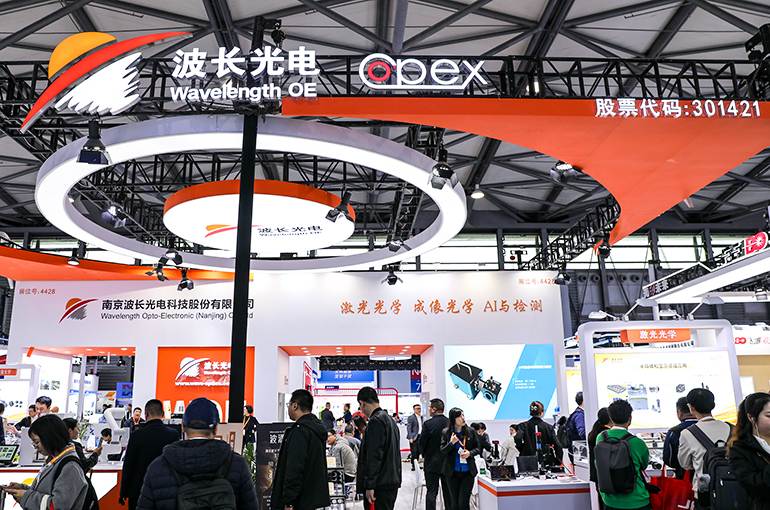
 China's Wavelength Opto-Electronic Sinks on Alleged Smuggling of Dual-Use Optical Lenses
(Yicai) Oct. 9 -- Shares of Wavelength Opto-Electronic Science & Technology plunged after the Chinese optical components supplier, its chairman, and three employees were prosecuted for allegedly smuggling restricted optical lenses with potential military applications out of China.
Wavelength Opto-Electronic [SHE: 301421], a major supplier of optical components used in industrial lasers and infrared thermal imaging systems, closed down 6.5 percent at CNY63.63 (USD9.50) today after plummeting by as much as 12.1 percent intraday.
The Third Branch of the Shanghai Municipal People’s Procuratorate has filed charges against Wavelength Opto-Electronic and four individuals, including Chairman Robert Huang, for allegedly exporting goods without the required dual-use item export licenses, the Nanjing-based firm announced yesterday.
The alleged offenses took place between August 2023 and April 2025 and involved goods worth CNY20.1 million (USD3 million). The defendants could face prison sentences and fines if convicted, although prosecutors have indicated that their confessions may warrant lighter penalties.
According to the indictment cited in the announcement, the defendants violated Article 151 of China’s Criminal Law, which bans smuggling prohibited goods and holds companies liable alongside the people responsible. Prosecutors said the evidence was sufficient to hold the company and the four individuals criminally liable.
Under the relevant provisions of the Criminal Law, those convicted may face up to five years in prison or criminal detention, along with a fine. In serious cases, prison sentences may exceed five years. The company could also be fined.
Besides Chairman Huang, the three individual defendants are Wu Hongxia, former director of the company's international business department in Nanjing, and two other employees from the same department.
However, prosecutors said the four individuals confessed to their own and the company's alleged offenses after being detained, potentially qualifying both the company and the employees for lighter penalties.
Neither the company's announcement nor the indictment identified the products beyond describing them as optical lenses. However, the Securities Times reported in June, when the case first emerged, that the defendants were suspected of exporting state-controlled germanium-containing lenses by falsely declaring their materials.
High-purity germanium is widely used in infrared lenses for thermal imaging cameras, night-vision equipment, and industrial inspection systems because it transmits infrared radiation while blocking most visible light. Germanium optical components subject to China's dual-use export controls require licenses before being shipped overseas.
Editor: Emmi Laine