

 China's Henlius Licenses Up to 10 Biosimilars, Drug Substances to Sandoz
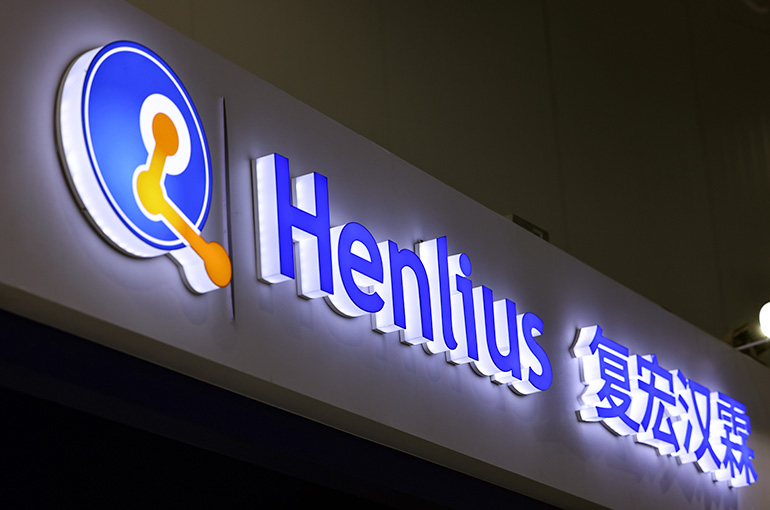
(Yicai) Aug. 17 -- Henlius Biotech said it has penned a deal with Switzerland's Sandoz for up to 10 of the Chinese drugmaker's biosimilars or drug substances.
The first batch of biosimilars or drug substances under the agreement will likely generate up to USD322 million in various revenues, Shanghai-based Henlius and its parent firm Fosun Pharmaceutica announced separately today. Three initial products and another potential one with an option held by Sandoz have been confirmed for the tie-up, including monoclonal antibodies and antibody-drug conjugate biosimilars.
Sandoz will have global commercialization rights outside China for the agreed biosimilars, while Henlius will be responsible for the development and manufacturing processes, the Basel-based firm said on the same day. The deal is "milestones-based for a total consideration of up to USD322 million, with near-term payments associated with the initial assets that could reach up to USD100.5 million," it added.
"One of the initial assets under the agreement will be a proposed cetuximab biosimilar, which is in clinical development," Sandoz pointed out. Cetuximab is an epidermal growth factor receptor-targeted oncology therapy sold under the name Erbitux, used to treat patients with metastatic colorectal cancer and squamous cell carcinoma of the head and neck, it added.
The other two of the initial products are intended for the treatment of primary hypercholesterolemia, as well as systemic lupus erythematosus and lupus nephritis, Fosun Pharma said.
The deal aims to fully leverage the advantages and resources of Henlius and Sandoz in research and development, manufacturing, and commercialization, continuously enhancing the accessibility and impact of Fosun Pharma's products and providing more treatment options for patients worldwide, the Chinese firm added.
Shares of Henlius [HKG: 2696] rose 1.8 percent to HKD68.50 (USD8.73) apiece as of 2.50 p.m. in Hong Kong today. Fosun Pharma [SHA: 600196] fell 0.7 to CNY24.05 (USD3.63) a share in Shanghai, while its Hong Kong-traded stock [HKG: 2196] climbed 0.8 to HKD16.95.
Editor: Martin Kadiev