



 China's Consumer Prices Stay Flat in September as Deflation Looms; PPI Slump Shrinks
(Yicai) Oct. 13 -- China's consumer price index remained unchanged last month despite inflation expectations while experts say shifts in policy and residents' willingness to spend money could make deflation woes go away.
The gauge of consumer inflation flatlined in September from a year ago, according to data released by the statistics bureau today. Chief economists polled by Yicai had predicted the CPI to rise by 0.15 percent. In August, the index gained 0.1 percent year-over-year, the first increase in three straight months.
Base effects and food prices contribute most to the movements, Bruce Pang, chief economist and head of research in China at professional services provider JLL, said to Yicai. The trend will return to growth because residents are gradually becoming more willing to spend money with stepwise improvements in their ability to consume, Pang added.
Food prices dropped by 3.2 percent in September, widening the pace of decline by 1.5 percentage points from August because of fluctuations seen during those two months of last year, causing a 0.6 percentage point slump in the headline figure this year.
Pork prices were another culprit, as cheaper prices disturbed the CPI to a large extent as the market lacks confidence while base effects increased, per Wang Qing, chief macro analyst at Golden Credit Rating International.
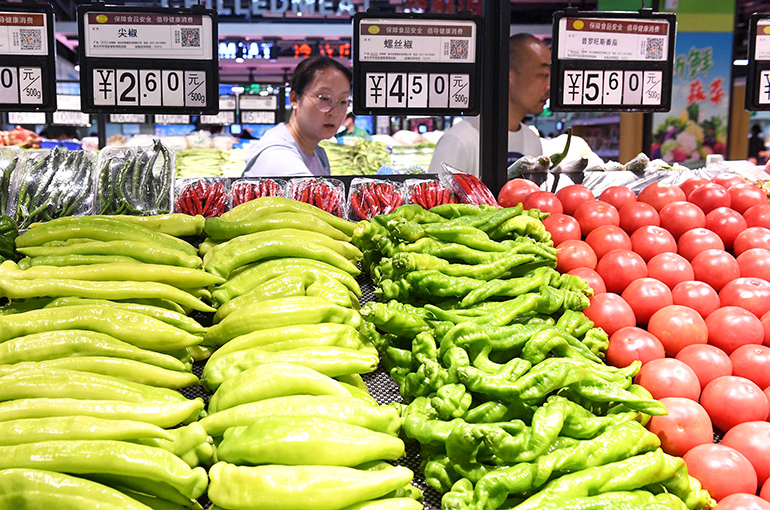
Prices of the staple meat in Chinese cuisine plunged by 22 percent in September YoY, faster than the 17.9 percent slump a month earlier, based on official data. Prices of fresh vegetables fell by 6.4 percent last month, or 3.1 percentage points quicker than in August.
Non-Spiraling PPI
However, factory gate prices moved down slower. China's producer price index fell by 2.5 percent last month after a 3 percent decrease in August. However, chief economists had predicted the decline to be smaller at 2.3 percent.
The PPI trend of prices that shrink slower is caused by a low base number, sustained recovery of domestic prices of raw materials, and the continued increase of global commodity prices, per a research note from Nomura.
In the months to come, it is possible for the PPI to contract even more, Wang said. But the future of industrial prices will mostly depend on the effects of this round of anti-cyclical adjustment policies, particularly whether or not the real estate market can rebound this quarter, the chief macro analyst added.
Editors: Shi Yi, Emmi Laine