



 China’s Car Export Surge Is Driven by Supply Chain Edge, Product Benefits, and Emerging Markets, CPCA Head Says
(Yicai) July 3 -- China’s surging auto exports are being driven by three key forces, according to Cui Dongshu, secretary-general of the China Passenger Car Association.
First is China's comprehensive new energy vehicle supply chain, where costs and iteration speed in batteries, motors, and electric control systems are globally leading, Cui told Yicai.
Second is product advantages, he said. Features such as fast charging and intelligent driving systems align with global electrification demand, while a global supply gap has emerged as traditional automakers struggle to transition quickly enough.
Third is growing demand from emerging markets such as in the the Association of Southeast Asian Nations, the Middle East, and Russia, where tariffs have fallen after free trade agreements with China, Cui said.
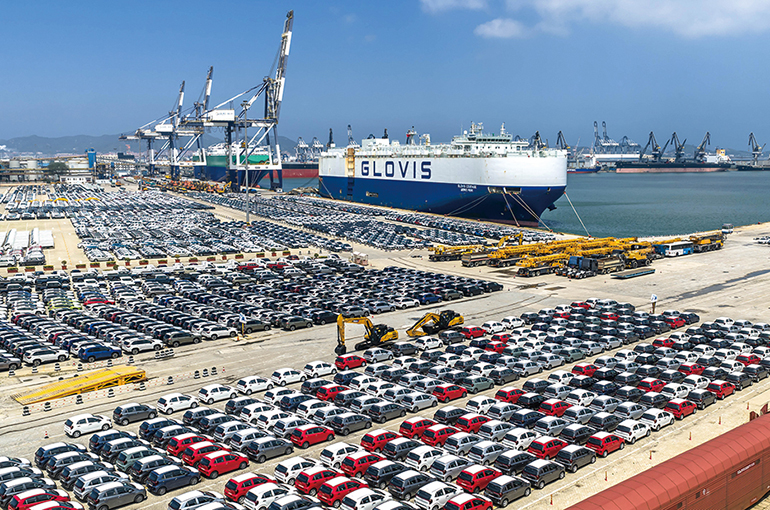
China’s auto exports climbed 54 percent by volume in the January to May period from a year earlier, and they jumped 56 percent by value, according to data from the China Association of Automobile Manufacturers. Outbound shipments of NEVs soared 79 percent by number, accounting for nearly 72 percent of the total.
Exports likely beat expectations in the first half to reach nearly five million units, Chen Shihua, the CAAM’s deputy secretary-general, said at the industry group’s monthly conference in June.
The main reason for the increase in exports this year is that Chinese NEVs are more competitive than their foreign counterparts, the head of a premium domestic NEV brand told Yicai.
The Chinese market is fiercely competitive and lacks new development space, so companies are mostly relying on overseas sales growth to meet targets, according to a spokesperson for a Zhejiang province-based carmaker, who added that selling overseas can also bring much profit.
Going global also brings its challenges. Geopolitical and trade barriers are key problems for Chinese carmakers venturing abroad, said Chen Jingjing, secretary-general of the auto branch of the China Chamber of Commerce for Import and Export of Machinery and Electronic Products. The European Union’s tariff and non-tariff barriers and investment curbs are becoming even greater obstacles, she noted.
Chinese vehicles have moved beyond a purely trade-driven phase and must shift toward localization and systematization, while strictly controlling non-compliant export behaviors, Chen said.
Editor: Futura Costaglione