



 China's AI Computing Boom Tests the Limits of Green Power, Experts Say
(Yicai) June 4 -- China's rapid artificial intelligence compute expansion, which refers to the computing resources needed to train and use AI models, is outpacing the growth of the renewable energy infrastructure needed to power it, making closer coordination between computing demand and clean electricity supply increasingly important, experts said at recent industry forum.
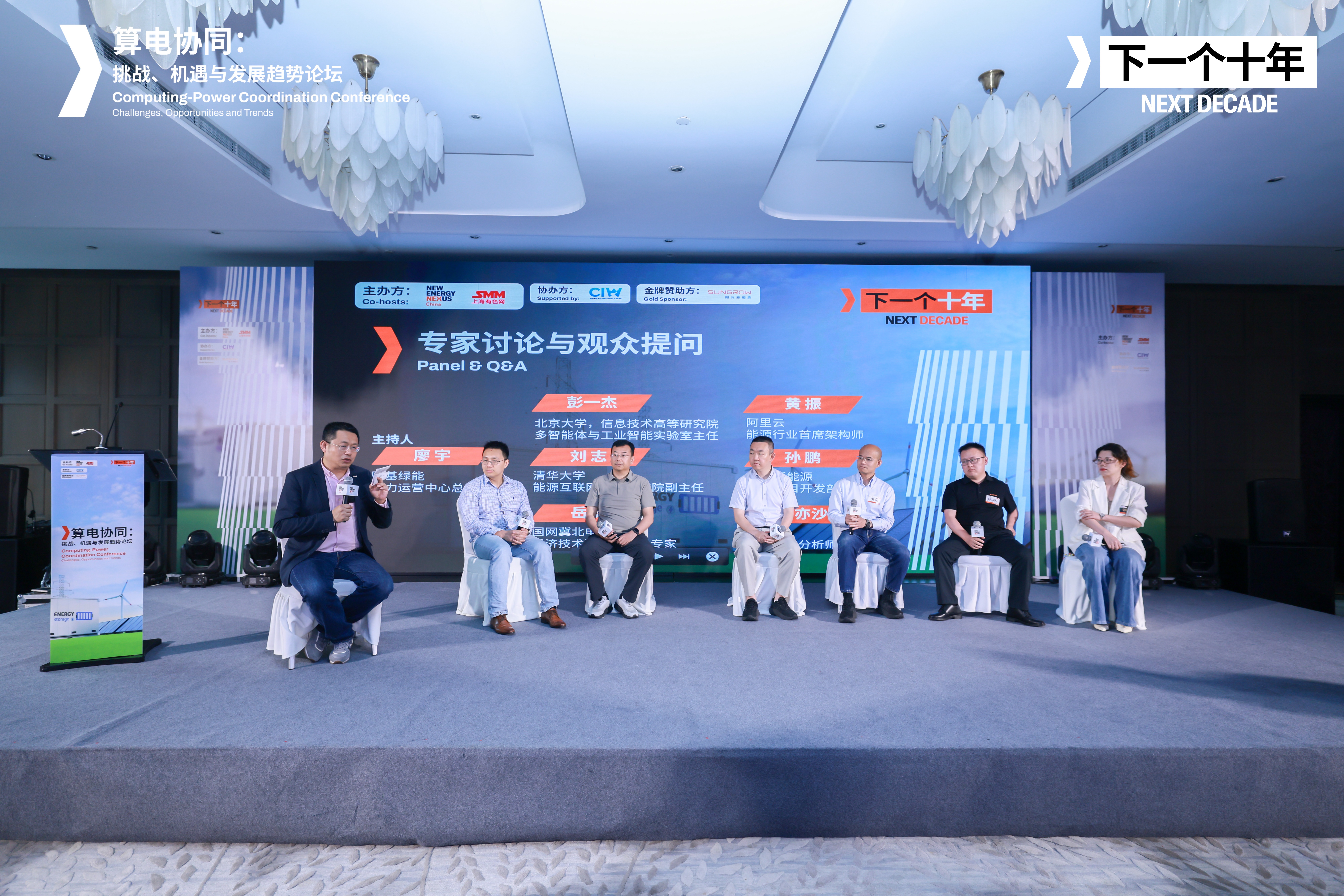
"The short, maybe unpleasant answer is that they cant make it a green revolution," David Fishman, a principal at Chinese energy-focused economic consultancy firm Lantau Group, told Yicai at the Shanghai industry Forum on June 2.
"It's incredibly difficult, it's expensive, it's slow. Even in China, which applies some of the world's strictest data center energy policies, the numbers do not yet add up on the ground. There's going to be gaps between how that green power is claimed by individual data centers and what that actually looks like on the grid level," Fishman said.
Global data center electricity consumption reached around 415 terawatt-hours in 2024, roughly 1.5 percent of global power demand, according to the International Energy Agency. The IEA projects that this figure will more than double to approximately 945 TWh by 2030, growing at four times the pace of overall electricity demand. China accounts for about 25 percent of current global data center power use and is forecast to reach 500 to 700 TWh by the end of the decade as AI workloads expand.
Accounting Mismatch
China's 15th Five-Year Plan, which runs until 2030, includes the coordinated deployment of green electricity and computing power as a national infrastructure priority.
An action plan issued by four central agencies, including the National Development and Reform Commission and the National Energy Administration, in May, requires new data centers within the eight national computing hub zones to source at least 80 percent of their electricity from renewables. New large-scale facilities must achieve a power usage effectiveness ratio, which is a measure of cooling and electrical efficiency, of 1.25 or below, with a stricter 1.2 threshold inside hub zones.
Fishman noted that a data center can achieve a strong PUE rating while still drawing the bulk of its power from coal, meaning the two metrics address different problems. On the sourcing side, the accounting standard currently in use, which is matching renewable consumption on an annual or monthly basis, falls short for a data center running 24 hours a day, seven days a week, he said.
"The goal will be to ensure that it gets green electricity for every single hour of the day. That's an incredible challenge," Fishman added.
Grid Stability
For grid operators, the scale of AI data center loads introduces risks beyond accounting. Training workloads generate periodic, high-amplitude power surges, while inference demand creates a persistent baseline that is difficult to interrupt, said Yue Hao, a senior expert at State Grid Jibei Electric Power's Economic Research Institute. Both patterns can put pressure on grid stability if they become large enough.
Yue pointed to Virginia as an example, where data center density has contributed to frequency instability events, including cascading outages from lightning strikes. In China, hub-zone concentrations in areas such as Zhangjiakou and Langfang already account for 20 percent to 30 percent of local electricity consumption, he noted.
The sector is navigating competing demands for low-carbon supply, low cost and high reliability, said Liu Zhi, deputy director of Tsinghua University's Energy Internet Innovation Research Institute. Millisecond-level voltage interruptions can abort AI training runs, corrupt model parameters, and generate losses running into the millions of Chinese yuan, equivalent to hundreds of thousands of US dollars.
One path being explored is designating delay-tolerant training workloads as flexible loads that can be scheduled around periods of peak renewable output. However, commercial alignment remains a barrier. Liu recounted an industry pilot in which the electricity team of a major technology platform was unable to persuade its operations counterpart to adjust compute scheduling, with the operations side judging the financial benefit insufficient relative to the reliability risk involved.
Major Hurdles
Fishman addressed the so-called“token export” problem. As Chinese AI models attract overseas users, the electricity consumed to serve those users via Application Programming Interfaces remains physically located in China. He said the European Union's existing practice of accounting for emissions embedded in Chinese manufactured exports could eventually extend to digital services.
"I could imagine a world where maybe in five years, maybe in 10 years, there's a real push to start understanding how these exported services are incurring emissions," he said.
Liu said China's transition from energy intensity controls to carbon emissions controls would change the economics of green power procurement. Green certificates have already risen in price as compliance requirements tighten, he noted.
Chinese photovoltaic giant Sungrow's data center investment arm said it has established a dedicated Automatic Identification and Data Capture unit and identified the mismatch between renewable asset lifespans, which is 20 years for wind and 25 for solar, and the rapid obsolescence of compute hardware as central obstacles to long-term power agreements.
Amazon Web Services described a tiered storage architecture, from microsecond-response capacitors to multi-hour battery systems, as essential to making AI data centers compatible with intermittent renewables.
Editor: Kim Taylor