



 China's Expedition Ship Successfully Obtains Seafloor Hydrothermal Sulfide in South Atlantic
(Yicai Global) Oct. 25 -- China's scientific expedition ship the Xiangyanghong 01 has successfully extracted seafloor hydrothermal sulfide, a substance which helps to understand the origin of Earth's original life process, the state-owned Xinhua News agency reported.
The vessel successfully obtained samples from the deposit in the South Atlantic on Oct. 23.
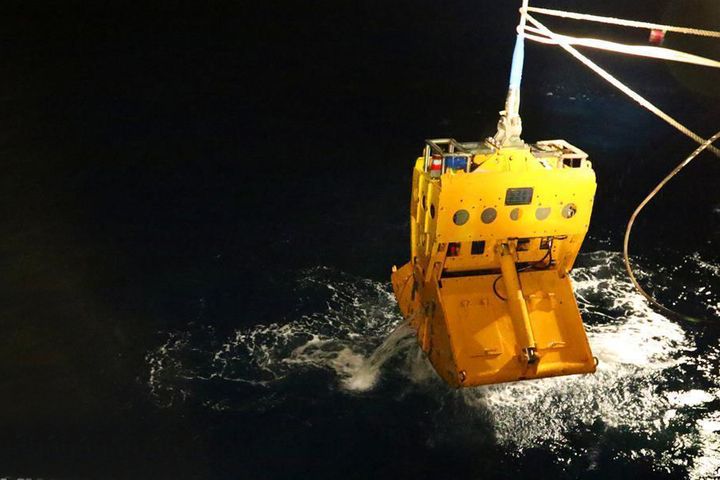
The researchers locked the target seafloor area 3,000 meters below from sea level through the video transmitted back in real-time by a TV grab bucket and successfully captured the massive metal sulfides near a 'smoking' 'black chimney.'
Seafloor hydrothermal sulfide vents, commonly known as submarine black chimneys, form when high-temperature hydrothermal fluids erupt from the oceanic crust onto the seafloor and its cooling sediments, since the extrusive high temperature hydrothermal fluid looks like black smoke.
International research on the North Atlantic Ridge is relatively mature, while that on hydrothermal fluid activities on the South Atlantic Ridge is still a work in progress, said Li Bing, assistant chief scientist with the Atlantic mission.
Seafloor hydrothermal sulfide deposits typically form in extreme environments, with deficient light and oxygen, but with high temperatures -- conditions very similar to those of the early Earth environment. Hydrothermal organisms abound in this area, further study of which will help to understand the origin of Earth's initial life process, Li said.