


 China Encourages Multi-User Renewable Power Supply Projects to Boost Local Consumption
(Yicai) May 19 – China released a new policy today encouraging investment in multi-user direct green power connection projects to promote traceable green production and boost local consumption of renewable electricity.
The move comes as global carbon regulation tightens and China advances its dual-carbon agenda. The policy marks another major step by Chinese energy regulators to improve local renewable energy consumption and support the transition toward greener industrial production.
The policy, jointly issued by China’s top economic planner, the National Development and Reform Commission, and the National Energy Administration, said users with green electricity demand can utilize nearby renewable energy resources to develop multi-user direct green power connection projects. Industrial parks, zero-carbon parks, and incremental power distribution networks may also organize such projects independently for all or some of their users.
The document added that priority support will be given to emerging and future industries, including computing infrastructure and green hydrogen, ammonia, and methanol production projects, to adopt direct green power connection models.
Push for Local Renewable Energy Consumption
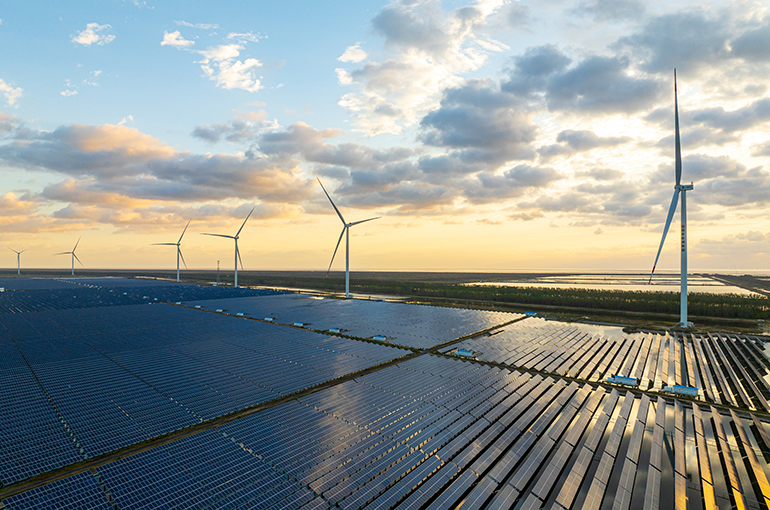
Multi-user direct green power connection projects involve multiple green electricity users that are independent legal entities. Under the off-grid model, renewable energy generated by the project is supplied entirely to users through self-built regional power networks. Under the grid-connected model, renewable power is first delivered to users through the project’s dedicated network, while surplus electricity is transmitted to the public grid through designated interfaces.
Because the project’s internal power supply system is strictly separated from the public grid in terms of infrastructure, operational responsibilities, and electricity metering, users can clearly trace the source of their electricity.
“This new policy provides a more economical green electricity consumption model compared with single-user direct green power connection projects and represents an important measure to improve the nearby consumption mechanism for renewable energy,” Lin Boqiang, dean of the China Institute for Studies in Energy Policy at Xiamen University, told Yicai.
In a policy interpretation released today, the NEA said the multi-user model represents a further upgrade from the single-user direct green power connection policy introduced last year and is intended to improve the local consumption of renewable energy at a higher level.
Stricter Consumption Requirements Set for Projects
According to the policy, annual self-consumed electricity must account for at least 60 percent of a project’s total available power generation. Self-used green electricity must currently account for at least 30 percent of total electricity consumption and rise to at least 35 percent by 2030. To increase local green power consumption, grid-connected projects are generally prohibited from transmitting more than 20 percent of their total available generation to the public grid after operations begin.
The policy also stated that the leading operating entity of a multi-user direct green power connection project must be an independent legal entity. Such entities should generally be jointly established by power generators and power users, although either side may establish them independently. For industrial park-based projects, park management committees may jointly invest with non-power third-party institutions to establish project operators.
Data released by the NEA in February showed that 84 direct green power connection projects had been approved nationwide at the time, with a combined installed capacity of 325.9 gigawatts. Investors included central state-owned enterprises, local state-owned enterprises, and private companies.
Editors: Tang Shihua, Emmi Laine