



 BYD, Tesla, and Six Other Carmakers Deny Report Chinese Authorities Called Them In Over Battery Locking Complaints
(Yicai) May 11 -- Eight electric automakers, including BYD, Tesla, Xpeng, and Li Auto, have rebutted a media report that said they were summoned by regulators in China after users complained of battery capacity being remotely restricted through over-the-air software updates.
The other four companies to issue denials on May 9 were Nio, Aito, a brand co-developed by Seres Group and Chinese tech giant Huawei Technologies, Geely Holdings' premium vehicle unit Zeekr, and GAC Group's new energy vehicle arm GAC Aion.
The repudiations followed a CCTV News item that reports about “OTA battery locking” on China's 12315 platform -- the official, nationwide consumer complaints and reporting system -- surged nearly four times in March from a year ago to more than 12,000, prompting regulators to call in eight automakers, placing three under investigation for violations. In addition, two withdrew controversial update packages and pledged to restore vehicle performance, it also said.
CCTV News subsequently issued a correction, amending the original report to say that eight automakers have been summoned over issues including abnormal acceleration, battery fires, and OTA updates since 2020, and not specifically for battery locking.
The China Association of Automobile Manufacturers has checked the information circulating online with the regulators and companies, Deputy Secretary-General Liu Yan told Yicai. “According to our understanding, the relevant authorities have not taken any enforcement actions, including summons or case filings, in connection with the matter.
“The content circulating online lacks an official source and is seriously inconsistent with the facts," Liu pointed out.
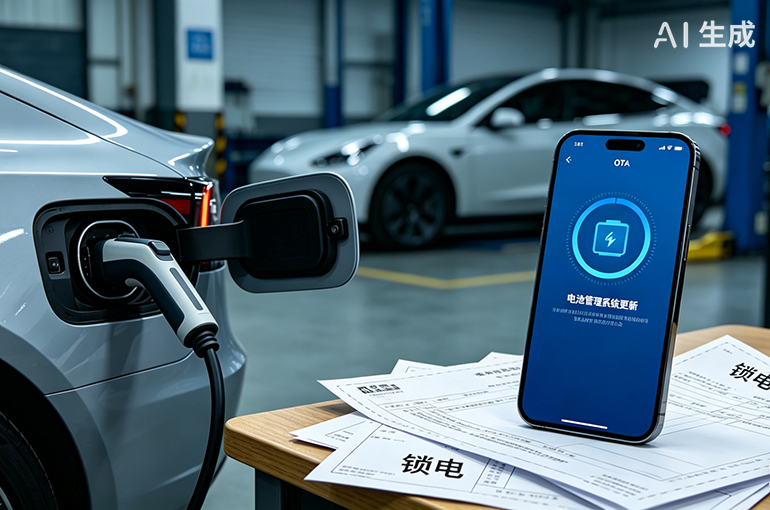
Battery locking is the practice of using OTA updates to restrict the usable capacity of a vehicle's battery to reduce the risk of spontaneous combustion and conceal underlying quality defects, without notifying owners. It has long been a source of consumer grievances, with 280 active cases on Sina's Heimao consumer complaints platform and 45,691 on vehicle quality site Chezhiwang.
Undisclosed battery locking could violate consumers’ rights to know and to choose. If the issue points to a battery safety defect, he said, the proper remedy is a recall or other lawful correction, not a hidden software restriction.
Automakers who use battery locking without notifying drivers may violate consumers’ rights to know and to choose under China's Law on the Protection of Consumer Rights and Interests, Beijing Business Today reported, citing Sun Yuhao, a senior partner at Shanghai Haihua Yongtai Law Firm.
If it reflects a underlying safety defect in the battery, carmakers should deal with the issue through a recall or similar measure rather than through an opaque software restriction, Sun pointed out.
In February, the Ministry of Industry and Information Technology and the State Administration for Market Regulation jointly issued a notice requiring carmakers to standardize OTA update practices, while also prohibiting the use of software upgrades to conceal vehicle defects or evade liability.
Editor: Martin Kadiev