


 Yicai Cultural Salon Highlights Macao’s Role in East–West Integration
(Yicai) Dec. 5 -- Macao’s unique geographical location and development history have made the special administrative region not only a bridge between China and international markets but also a key venue for cultural exchange and integration between China and foreign countries, speakers said at a themed salon initiated by Yicai.
As a world tourism and leisure center and a platform for trade cooperation between China and Portuguese-speaking countries, Macao has leveraged its openness and its integration with the Guangdong-Hong Kong-Macao Greater Bay Area to form an open economic system aimed at global engagement, said Wei Tao, founder and chairman of the Greater Bay Area Contemporary Art Promotion Association, during the recent Yicai Panorama event.
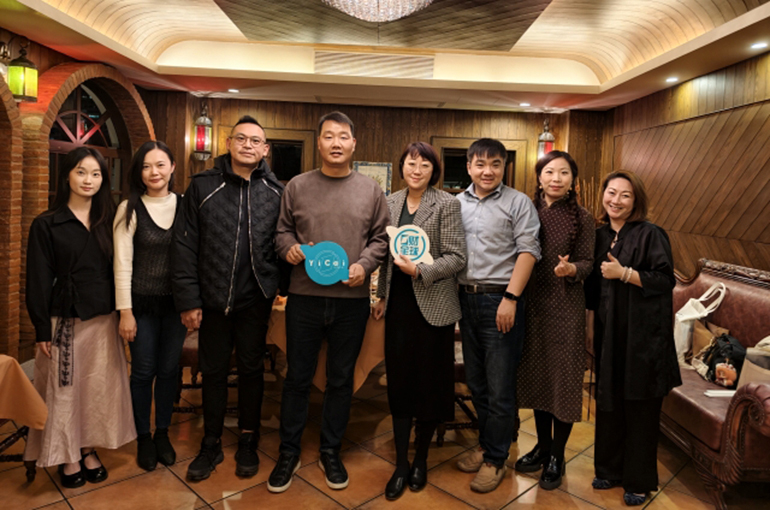
Yicai Panorama is a series of cultural exchange activities initiated by Yicai to support Chinese enterprises going abroad. The Macao event is the second salon in the series and was co-hosted by the Greater Bay Area Contemporary Art Promotion Association and the Faculty of Humanities and Social Sciences of Beijing Normal–Hong Kong Baptist University.
The growing openness of finance and the flow of commerce have expanded possibilities for art. The Greater Bay Area Contemporary Art Promotion Association can pair its strengths in artist and curatorial resources with educational institutions to promote more international artist exchanges in Macao and help build an important cultural window, Wei noted.
Macao sits on the southwest side of the Pearl River Estuary and has long served as a maritime gateway for the Pearl River Basin. It was also a critical hub on the Maritime Silk Road connecting Guangzhou with Southeast Asia and the Indian Ocean, according to Dr. Chen Jianing of Beijing Normal–Hong Kong Baptist University.
Macao is not only a transit point for trade but also a melting pot of cultures, and its historical importance extends well beyond economic exchange to stand as lasting evidence of the openness and inclusiveness of Chinese civilization, Chen emphasized.
Macao’s cultural landscape illustrates this fusion, said Jun Zilan, a Ph.D. student in Fine Arts at Macau University of Science and Technology. For example, next to the iconic Western structure of the Ruins of St. Paul’s stands the Templo de Na Tcha, representing traditional Chinese culture. This blend of Eastern and Western influences offers valuable inspiration for cross-cultural art research, she said.
The construction of the Guangdong-Hong Kong-Macao Greater Bay Area is a major strategy for China to promote high-quality development, deepen reform and opening up, and enhance global competitiveness. Within this framework, the Greater Bay Area’s connectivity is creating more opportunities for people in Hong Kong and Macao.
Preparations are underway for the second Greater Bay Area Young Artists Scheme, which organizers hope will debut next year alongside the Macao stop of the 10th anniversary event of Yicai’s English-language media. The initiative aims to tell China’s story from both commercial and cultural perspectives, Wei revealed.
Editors: Dou Shicong, Emmi Laine