


 Shein’s Founder Reaffirms China Roots, Vows Major Guangdong Supply Chain Investment
(Yicai) Feb. 25 -- Shein’s reclusive founder Chris Xu has reaffirmed the fast-fashion giant’s Chinese origins and pledged to invest more in southern China to beef up the company’s supply chain.
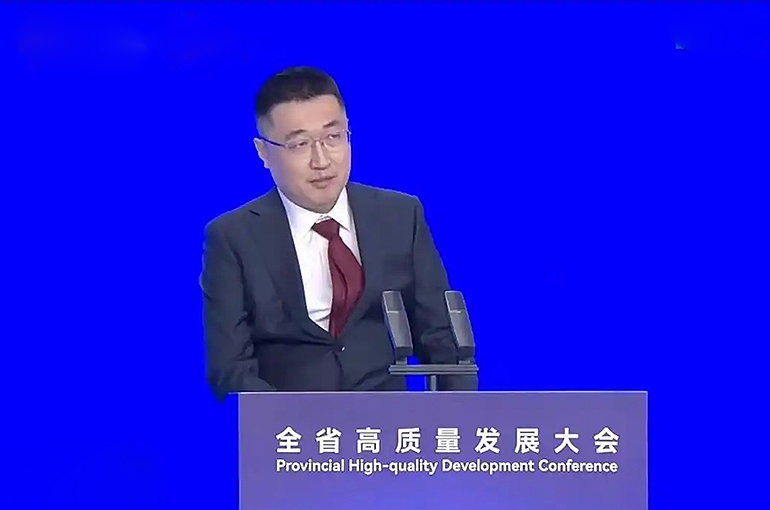
“Guangdong is where Shein’s roots are, and where our journey began,” Xu said in his first ever public address yesterday. “Guangdong’s complete industrial ecosystem and first-class business environment have made Sheing’s fast growth possible,” he noted, adding that the online retailer will "continue to put down roots in Guangdong.”
Shein is investing more than CNY10 billion (USD1.46 billion) to strengthen its supply chain in the southern Chinese province, Xu, who is also Shein’s chairman, told the Guangdong High-Quality Development Conference, an event organized by the provincial government.
Since being set up in the provincial capital of Guangzhou in 2014, Shein has grown rapidly, Xu pointed out. Last year, the platform exported more than CNY100 billion (USD14.5 billion) of goods to over 160 countries and regions, he revealed.
This first public address by Xu signals a major shift in Shein's narrative, according to Hu Jianlong, founder and chief executive of e-commerce advisory and business development platform Brands Factory. In recent years Shein has presented itself as a global brand headquartered in Singapore, deliberately downplaying its Chinese origins, he said.
"By openly embracing his identity as a Chinese entrepreneur, he is signaling that Shein is no longer concealing its Chinese roots, but actively embracing them,” Hu noted.
Guangdong’s comprehensive supply chain network -- from garment factories in Panyu district to logistics hubs in Baiyun district -- underpins Shein’s “small-batch, fast-response” model, allowing the firm to shorten the timeline from design to customer delivery to just two to three weeks, Xu said.
The tight integration of manufacturing and services is Shein’s main competitive advantage, he said. "We use technology and digital tools to track global fashion trends and translate fragmented market demand into frontline production orders,” he said.
Shein tightly links cross-border logistics with manufacturing so that "user feedback can directly trigger factory reorders or style refinements, driving manufacturing upgrades from the demand side," Xu pointed out. The company works with nearly 10,000 suppliers in Guangdong and supports more than 600,000 jobs across the province, he added.
Shein also plans to deepen its participation in cross-border e-commerce and industrial cluster pilots in Guangdong over the next three years, helping more small and medium-sized factories benefit from cross-border e-commerce, he stressed.
Established in 2014, Shein has a valuation of CNY365 billion (USD53.1 billion), ranking it the world’s ninth-biggest unicorn, according to the Hurun Global Unicorn Index 2025, which defines unicorns as startups founded in the 2000s that are worth at least USD1 billion and have not yet gone public.
Shein's initial public offering path remains unclear. The company was reportedly planning to go public in London last April, while subsequent reports in July suggested it had pivoted to Hong Kong after facing obstacles in the UK capital. But Shein told Yicai that the reports of a Hong Kong IPO were "false and malicious speculation." It has not made further updates on the matter since.
Xu's rare appearance also has significant meaning for Guangzhou, according to Hu. The city has fallen behind Shanghai, Beijing, and Shenzhen in attracting major firms, so for a globally influential company like Shein to reaffirm its local commitment is a positive, he noted, adding that the value of its efforts to project a new-economy image may outweigh any direct economic returns.
Editor: Martin Kadiev