


 Shanghai’s Nine-Month Trade Jumps 18% to Record USD590.5 Billion on AI, High-Tech Manufacturing
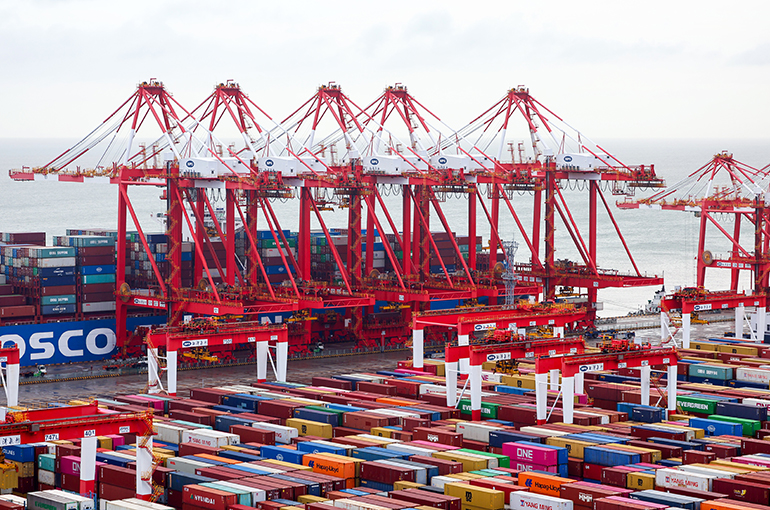
(Yicai) Oct. 23 -- Shanghai’s foreign trade in goods jumped 18 percent to an all-time high of CNY3.94 trillion (USD590.5 billion) in the first three quarters of the year, powered by artificial intelligence hardware and high-tech manufacturing.
Exports soared 22 percent to CNY1.81 trillion in the nine months ended Sept. 30, compared with a 20 percent rise in the first six months, while imports climbed over 14 percent to CNY2.13 trillion, versus a 17 percent first-half gain, figures released by the city’s statistics bureau showed yesterday. High-tech manufacturing exports surged 33 percent, accounting for 29 percent of the total.
Shanghai’s exports have maintained strong double-digit growth every month so far this year, culminating in a record-breaking performance in September, Li Jirong, head of the Shanghai Customs’ statistics and analysis division, said at a news briefing today. Specific figures for last month are not yet available.
AI hardware and green, low-carbon products have emerged as the two main drivers of export growth across product categories, Li said. Solid-state drives, a key component of AI computing hardware, are one example. Shanghai exports of SSDs surged 1.6 times in the first nine months to CNY67.4 billion (USD10.1 billion), contributing 2.8 percentage points to overall export growth.
The Association of Southeast Asian Nations remained the city’s largest export destination for the fifth consecutive month. Shipments to ASEAN soared 35 percent, contributing 5.4 points to overall export growth.
“This reflects the strong momentum of regional economic integration between China and ASEAN, as well as how Shanghai businesses are diversifying their overseas markets,” Li noted.
Growth in Shanghai-ASEAN trade can be attributed to three main factors, he said. First, their industrial and supply chains have become increasingly entwined. Efficient division of labor and close cooperation have fostered industrial synergies. In the first three quarters, Shanghai’s trade with ASEAN in intermediate goods jumped 36 percent, accounting for over 60 percent of the city’s total trade with the bloc.
Second, Shanghai and ASEAN have complementary strengths in exports and imports. Shanghai’s competitive products such as electric vehicles, photovoltaics, and lithium batteries offer ASEAN consumers a wider range of high-quality goods at competitive prices. In January to September, Shanghai’s exports to ASEAN of these three product categories soared by 68 percent, 3.4 times and 2.1 times, respectively.
Third, the benefits of trade cooperation and free trade agreements continue to materialize. Policy benefits from the Regional Comprehensive Economic Partnership and the upgraded China-ASEAN Free Trade Area 3.0 protocol, together with substantial cooperation in areas such as agriculture and food, have provided solid support for sustained growth in Shanghai’s trade with ASEAN, Li said.
Editor: Kim Taylor