

 Germany's Drug Price Reform Brings New Opportunities and Challenges to Chinese Drugmakers as Global Peers Reassess Investment
(Yicai) Oct. 29 -- Germany's healthcare reforms aimed at cutting drug costs have raised concerns among multinational drugmakers about the country's investment climate, bringing both new opportunities and challenges for Chinese manufacturers of innovative drugs amid their overseas expansion boom.
Roche has temporarily put all future investment decisions in Germany on hold due to local healthcare cost-cutting policies, Daniel Steiner, chief executive of the Swiss drugmaker's German arm, said on Oct. 19. The Basel-based firm confirmed to Yicai that it made the decision this summer.
On the same day Steiner made the remark, China's Hansoh Pharmaceutical Group announced it had signed a licensing agreement worth over USD15 billion with Roche covering antibody-drug conjugates, with an upfront payment of USD400 million. Although the two moves are not directly linked, they highlight a broader industry trend: capital-intensive expansion is shifting toward markets with more predictable policy environments, while pharmaceutical firms increasingly turn to China to replenish drug development pipelines.
In June, US drugmaker Eli Lilly announced it would halve its USD2.3 billion planned investment in Germany, while New York-based Pfizer said it was reviewing the timing, scope, and priorities of some German investments. In addition, Germany's Boehringer Ingelheim dropped a EUR900 million (USD1 billion) investment plan.
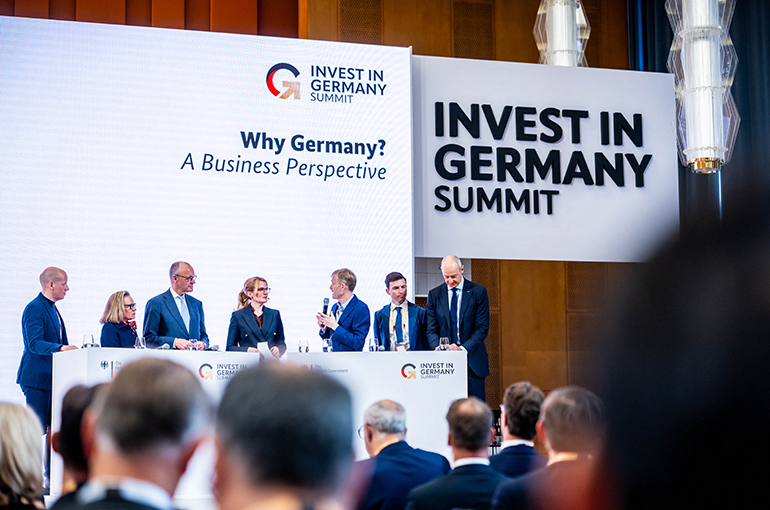
At the center of these moves was Germany's statutory health insurance reform, which passed in July and will raise mandatory discounts on most patented drugs to 15.5 percent from 7 percent next year. The government aims to rein in healthcare spending, but drugmakers fear the price cuts will undermine returns on research, development, and manufacturing investments.
Licensing-out deals have become a key way for China's innovative biotech companies to fund drug development and expand globally, with deals worth USD139.4 billion signed this year as of Oct. 8, exceeding last year's total of USD138.8 billion. Upfront payments reached USD8 billion in the first three quarters, also surpassing 2025's figure.
About one-third of drugs in global pharmaceutical development pipelines originate in China, up from just 4 percent in 2014, according to an estimate by ING. Australia's Macquarie Capital said acquiring rights to promising drug candidates from Chinese companies costs multinational drugmakers less than developing them independently, an especially attractive option for firms cutting costs ahead of patent cliffs.
However, for Chinese drugmakers expanding overseas through licensing, rising deal values do not guarantee realized revenue. Although multinational buyers are the first to bear the impact of falling drug prices in Europe, their Chinese partners are not entirely insulated.
Most of the headline value of licensing-out agreements consists of milestone payments contingent on subsequent development, regulatory approval, and commercialization. If European drug prices remain under pressure, sales in the region could suffer, potentially reducing the payments Chinese companies ultimately receive.
For Chinese drugmakers seeking to enter Europe independently, Germany's proposed exemption provisions also signal that the bar for entering the continent is extending beyond regulatory approval and price negotiations to include local research, manufacturing, and employment. According to some market observers, the sustainability of China's licensing deal boom will partly depend on how governments assess the security risks associated with such agreements.
US' most-favored-nation drug pricing policy, which links prices for some medicines in the United States to lower prices in Europe and elsewhere, has further intensified transatlantic tensions over drug pricing. The number of new drug launches in the European Union plunged about 35 percent in the 10 months after US President Donald Trump signed the related executive order from the prior 10 months, according to analytics firm GlobalData.
In June, the Office of the US Trade Representative also launched a Section 301 investigation into Germany's pricing of innovative drugs, which could lead to additional tariffs. The German government is considering exemptions from the higher discounts for drugmakers that maintain local research, manufacturing, and employment, but it has not finalized the proposal yet.
Editor: Martin Kadiev