




 First Fuel From Goldwind's Green Hydrogen Project in Inner Mongolia Is Shipped Overseas
(Yicai) Oct. 22 -- China's green hydrogen sector is entering the commercial proof stage, where it can be assessed and financed, with the first batch of bio-methanol from a project by Chinese wind turbine maker Goldwind Science & Technology in Inner Mongolia Autonomous Region delivered to the Port of Busan in South Korea.
The first of Hydrexia Holding's hydrogen production plants at Goldwind's green methanol project in Xing'an League has been operating stably, the Shanghai-based integrated hydrogen technology solution provider announced at the Green Fuel Industry Forum on Oct. 19. Relevant bio-methanol has been used to refuel ships in Busan, it added.
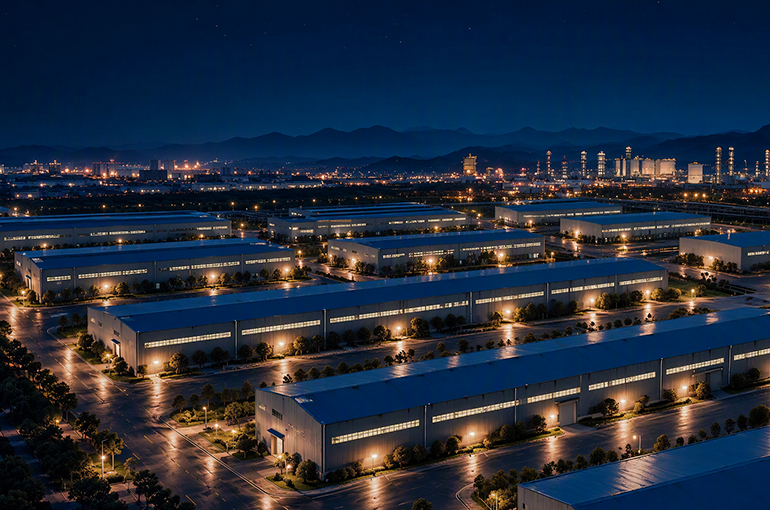
Goldwind's project uses wind power to produce hydrogen and couples it with biomass gasification to boost green methanol production, with a total planned output of 1.45 million tons and a 250,000-ton Phase I capacity already in operation. Hydrexia is the core technology and equipment supplier for its hydrogen production segment.
Beijing-based Goldwind has signed long-term green methanol supply guarantee agreements for more than 850,000 tons with Denmark's Maersk, Germany's Hapag-Lloyd, and Japan's Ocean Network Express Holdings. Last month, the project's first batch of products completed international certification.
Behind the commercialization boost lies the economics validated through large-scale industrial operation. Yao Changsheng, chairman of Hydrexia, said that with the launch of next-generation hydrogen electrolysis products, the company can reduce the levelized cost of green hydrogen to CNY10 to CNY12 (USD1.50 to USD1.80) per kilogram.
In addition, China's Ministry of Industry and Information Technology recently issued a document organizing the implementation of four pilot tasks for comprehensive hydrogen energy applications: hydrogen energy technology and equipment research and development, industrial hydrogen energy projects, promotion of fuel cell vehicles, and building hydrogen refueling stations.
The new policy focus is expanding from fuel cell vehicles to developing a supply-and-demand system, coordinating the promotion of large-scale hydrogen energy applications across equipment manufacturing, green hydrogen production and sales, and supporting infrastructure, while also exploring a commercial closed loop, an executive at an electrolyzer company told Yicai.
China's green hydrogen market has passed its bubble period and entered a stage of steady growth, with an industry explosion expected between 2030 and 2035, said Ouyang Minggao, professor at Tsinghua University and president of the International Hydrogen Fuel Cell Association. By 2050-2060, as carbon neutrality is gradually achieved, the domestic green hydrogen market could reach 100 million to 175 million tons, accounting for 10 percent to 15 percent of terminal energy consumption, he added.
China accounts for about 30 percent of the global hydrogen production and consumption, with the country having upgraded hydrogen from a chemical raw material to a strategic resource at the legal level, noted Mikaa Blugeon-Mered, a senior expert on global hydrogen market research at the University of Quebec, adding that it has also actively laid out key midstream segments including pipeline transportation and hydrogen storage, an exploratory move ahead of the global curve.
In addition, the decarbonization in the global aviation and shipping sectors is creating robust demand for green fuels. In 2023, the International Maritime Organization adopted a new emissions reduction strategy requiring the shipping industry to cut carbon emissions by at least 20 percent (striving for 30 percent) from 2008 levels by 2030, and to reach net zero across the entire industry by 2050.
In addition, the Carbon Offsetting and Reduction Scheme for International Aviation entered its first phase in 2024 before switching to a mandatory compliance model next year, requiring global airlines to purchase sustainable aviation fuel or carbon allowances to offset excess emissions.
According to estimates by Det Norske Veritas, driven by the European Union carbon tax, global aviation and shipping will consume a combined 34 million tons of green fuels by 2030.
Editor: Martin Kadiev






