



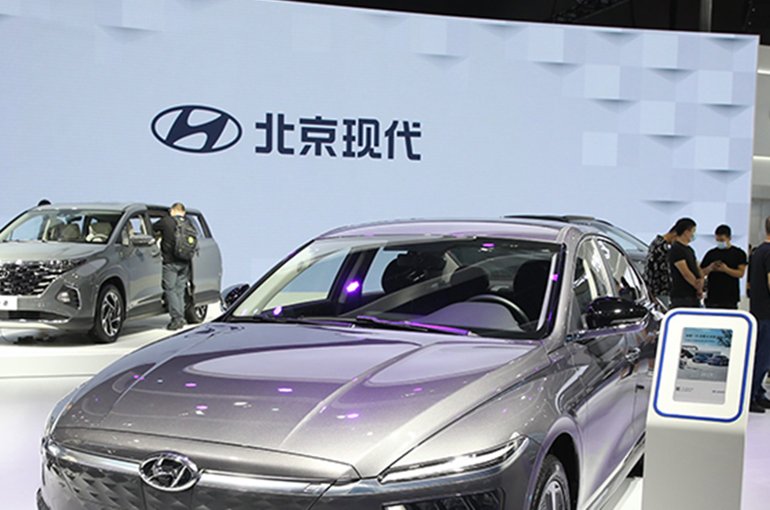
 [Exclusive] Beijing Hyundai’s First Chinese General Manager to Exit After Just One Year
(Yicai) Oct. 30 -- Li Fenggang, the first Chinese national to serve as general manager of Beijing Hyundai Motor, the 50:50 joint venture between China’s BAIC Motor and South Korea’s Hyundai Motor, will step down on Nov. 1, one year after taking up the role, Yicai learned today from company insiders.
Li’s departure is more than a routine management change, a source familiar with the matter told Yicai. Behind his exit lie disagreements between Beijing Hyundai’s Chinese and South Korean shareholders over the JV’s future development path.
Over the past year, the two shareholders have failed to reach consensus on key issues including business targets and cost-cutting goals, the source said. This has stalled efforts to deepen the firm’s localization reforms. As Beijing Hyundai’s first Chinese general manager, Li, who previously worked for FAW-Volkswagen and FAW Audi Sales, found himself at the center of these tensions.
Under the JV’s established organizational structure, the general manager of Beijing Hyundai is appointed by the South Korean shareholder and is usually held by a South Korean national, while the executive deputy general manager is appointed by BAIC. Li’s appointment as the firm’s first Chinese general manager was widely seen at the time as part of Hyundai Motor Global Chief Executive Officer José Muñoz’s efforts to localize the management team.
However, according to people familiar with the matter, South Korean nationals continue to dominate key positions within the management structure appointed by the South Korean shareholder. In practice, Li’s authority over resource allocation and business decision-making did not match the seniority implied by his title. The underlying strategic differences and lack of mutual trust between the two shareholders were issues beyond the management team’s ability to resolve.
Disagreements between shareholders in a JV can greatly undermine operational efficiency. At Beijing Hyundai, the differences first became apparent in discussions over annual targets, with the Chinese and South Korean shareholders struggling for a long time to reach an agreement.
It was not until September this year that the two sides finally reached a new consensus, setting an annual sales target of about 160,000 vehicles and aiming to keep losses at around CNY1.9 billion (USD285 million).
Li’s departure has brought the issue of Beijing Hyundai’s failure to localize decision-making authority into sharper focus. Although the Chinese and South Korean shareholders have now reached a temporary agreement on the company’s operating targets, how the JV will move forward remains to be seen.
Editor: Kim Taylor