



 Envision Turns Wind Power Into AI Power in Northern China
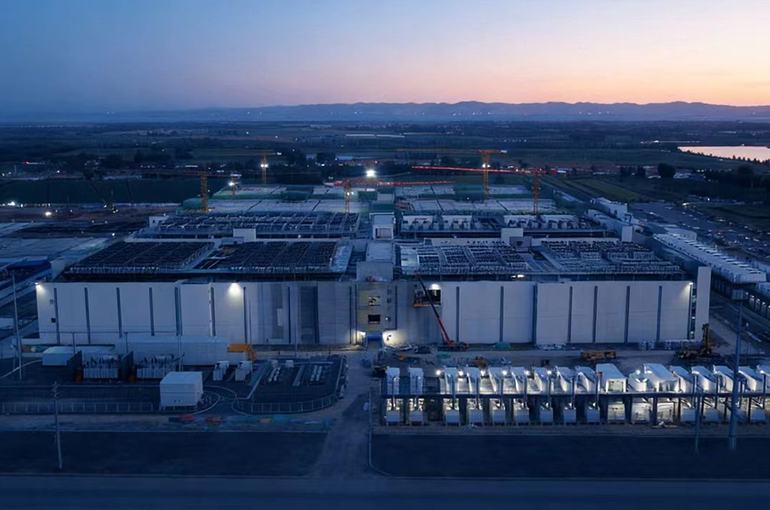
(Yicai) Aug. 7 -- Envision Group, a leading green technology and renewable energy business, has launched a vast supercomputing hub in northern China that links artificial intelligence computing with the region’s abundant clean energy resources, marking a push to develop lower-carbon infrastructure for the fast-growing AI sector.
The Envision Ulanqab Xinghe Base, located in the Inner Mongolia Autonomous Region, can provide one million petaflops of computing power to leading AI and other technology firms, a spokesperson for its Shanghai-based owner said yesterday, when the hub came on stream.
The AI data center is backed by 2 gigawatts of renewable energy capacity, including wind power, to ensure stable operations at the local AI chip cluster, the person said.
Ulanqab, city in south-central Inner Mongolia, is one of eight computing hubs in China’s "East Data, West Computing" initiative, with a unique advantage in network latency that allow it to efficiently handle real-time computing workloads while benefiting from lower operating costs, said Zheng Zihao, general manager of Envision AI Data Center.
“We can fully utilize the abundant wind energy resources of Ulanqab and achieve direct green power supply for the computing power center through self-built wind farms and dedicated transmission lines,” Zhao noted.
At more than 20.3 GW, renewable power accounted for two-thirds of Ulanqab's installed electricity generation capacity as of the end of last year, allowing Envision to integrate locally generated clean energy into the operation of the AI data center. The city's energy storage facilities had a maximum discharge capability of 3.2 GW and a combined storage capacity of 11.1 gigawatt-hours.
“Envision plans to develop a green power direct supply mode for its Ulanqab computing power base,” Zheng said. “The company will translate its experience in integrated operation of power generation, grid, load, and storage into a replicable technical solution and then export it to overseas regions with urgent computing power demand and weak power infrastructure.”
Editors: Tang Shihua, Futura Costaglione