



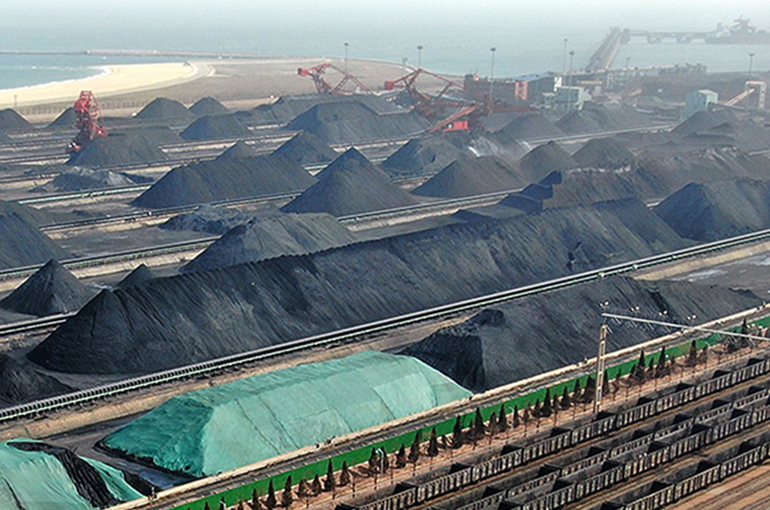
 Coal Prices Shoot up Following Supply Drop in Wake of Shanxi Mine Disaster
(Yicai) Sept. 22 -- Coal prices have surged in China this month, even though the market has theoretically entered the off-season when demand usually dips. Insiders have pointed to a sharp drop in supply following a safety crackdown after a mine disaster in May.
The closing price of Qinhuangdao Port 5,500-kilocalory thermal coal surged to CNY985 (USD147.12) per ton on Sept. 11, the highest since September 2023 and up over 40 percent from a year ago. The price has been hovering around CNY980 per ton in recent weeks.
Yicai learned from industry insiders that one of the main reasons is the contraction of supply caused by a reduction in output in Shanxi province, the main coal producing area in China. From June to August, raw coal output in Shanxi dropped over 100 million tons.
This has pushed up prices of thermal coal since the end of August. According to commodities information provider Mysteel, Qinhuangdao Port 5500 kcal thermal coal was CNY860 per ton on Aug. 20 and CNY890 on Aug. 31, before surging to CNY985 on Sept. 11. It then dipped only slightly to CNY983 on Sept. 20.
There has been an even bigger jump in prices of coking coal. According to data from the Ministry of Commerce, the spot price of coking coal soared from around CNY1,250 per ton in June and July this year to CNY1,508 per ton on Sept. 11, up nearly CNY500 per ton from CNY1,037 per ton early this year.
A senior executive at a coal company told Yicai that the main reason for the price surge is the reduction in supply after a deadly mining accident in May, with a particularly big impact on coking coal. There has been a shortage of domestic supply in recent years, so imports of coking coal have been rising, but coal imported from Mongolia has edged down recently due to transportation issues.
On May 22, there was a gas explosion at the Liushenyu coal mine operated by Shanxi Tongzhou Coal and Coke Group in the city of Changzhi, Shanxi province. It was the worst coal mine accident in China for years, with 82 people dying and 120 injured, and local authorities issued a sweeping crackdown amid public anger at lax standards.
A large number of coal mines in Shanxi immediately suspended production amid safety inspections and in July, the raw coal output nationwide dropped 10 percent from the year before, with that in Shanxi down over 30 percent.
According to Mysteel, 204 coal mines in Shanxi suspended production from May 23, with a total annual production capacity of 275 million tons. Many have since reopened, but as of Sept. 16, 75 of the mines, with a production capacity of 72.9 million tons, are still in a state of shutdown.
Coal imports from Mongolia have also declined significantly since mid to late August, with the number of coal trucks passing through Ganqimaodu Port falling from between 1,500 and 1,600 per day to between 500 and 600, Duan Zhizhan, a coal researcher at Founder CIFCO Futures, told Yicai. Coal imports from Russia and Australia have increased, but it cannot compensate for the reduction in China, Duan said.
The coal company executive Yicai spoke to said that this price surge could just be a short-term effect, and in the medium to long term, moves to cut overcapacity in China’s steel industry will lower the demand for coking coal. And even though the demand for computing power is rising, overall electricity demand is set to fall. This, combined with growing renewable energy sources, will rein in demand for thermal coal.
The peak of the coal supply-demand gap appears to have passed, but international energy prices remain high, which will continue to support domestic coal prices.
Editor: Tom Litting