



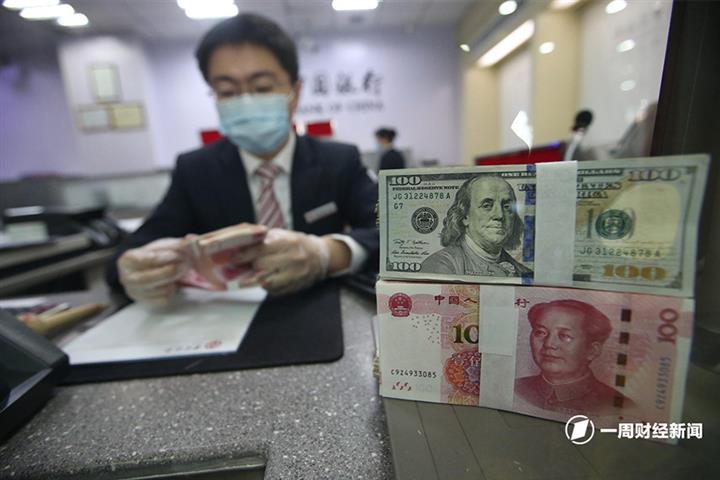
 Chinese Yuan Has Been Stable This Year, Foreign Exchange Regulator Says
(Yicai Global) April 17 -- China’s yuan has stayed basically stable amid two-way fluctuations on the foreign exchange market since the start of this year, according to the State Administration of Foreign Exchange.
The yuan index that the China Foreign Exchange Trade System compiles rose 2.9 percent in the first three months, indicating that the exchange rate has remained relatively stable among major currencies, Wang Chunying, a SAFE spokeswoman, said at a press conference today.
The Chinese market and yuan-denominated assets still retain a strong attraction for overseas investors, she added.
Generally, no change has occurred to the long-term upward trend for the fundamentals of the Chinese economy, and the domestic market still has huge potential, Wang said.
The US dollar index rose 2.8 percent in the first quarter, with the yuan down 1.8 percent against the US dollar, while the MSCI Emerging Market Currency Index fell 12.9 percent, the British pound fell 6.3 percent against the dollar and the euro lost 1.6 percent against the greenback.
Chinese banks settled USD491.5 billion worth of foreign exchange in the three months ended March, USD39.1 billion more than the dollar-denominated foreign exchange sold over the period, according to SAFE data published today. Of that total, banks settled USD198.1 billion last month, USD18.6 billion more than the US dollar-denominated foreign exchange sold.
There was an overall surplus in forex settlement and sales last month despite a deficit of USD47.7 billion between the amount of cross-border receipts and payments by non-banking sectors, Wang said. Cross-border receipts and payments by non-banking sectors and foreign exchange settlement and sales among banks have basically been balanced since the start of April, she added.
China’s foreign exchange reserves are generally stable, Wang pointed out. By the end of the first quarter, the country’s foreign exchange reserve balance was about USD3.06 trillion, down 1.5 percent from the beginning of the year, mainly due to a combination of exchange rate conversion, asset price changes and other factors.
Risk-off sentiment has been on the rise due to widespread financial market slump in the first quarter, Wang said, referring to the turmoil in the international financial market. So it is normal for some investors to trim their exposure to the stock market amid tight dollar liquidity. Overseas investors pulled about USD10 billion from China in the first quarter, a drop in the bucket compared with the size of the Chinese stock market, and therefore has very little impact on the market.
Editor: Peter Thomas