


 Chinese Yuan Gains Ground in SE Asia Amid US Tariffs, Supply Chain Shifts
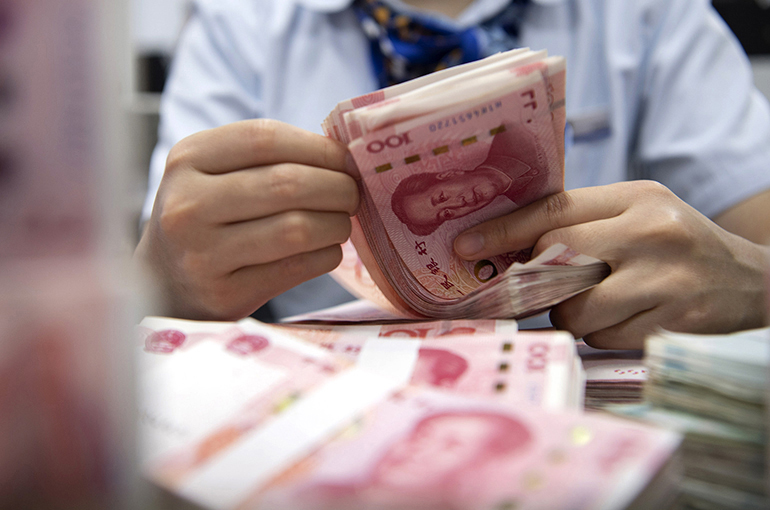
(Yicai) March 30 -- The Chinese yuan is becoming an increasingly important currency for trade and investment in the Association of Southeast Asian Nations, challenging the region’s long-standing reliance on the US dollar, as the United States ramps up tariffs and technology restrictions that are reshaping supply chains in Southeast Asia. These shifts are turning the region into one of the most promising destinations for Chinese firms expanding overseas, further boosting the role of the redback.
It has now been five years since China and ASEAN formed a comprehensive strategic partnership, and Chinese companies going global are shifting from simply “going abroad” to “blending in,” a number of speakers said at the ASEAN Innovation Cooperation and Development Forum held during the 2026 Zhongguancun Forum Annual Conference on March 26.
These firms’ approach has also evolved from exporting products to building full industrial chains overseas, with artificial intelligence and the digital economy, new energy vehicles and smart manufacturing emerging as key growth areas, they said.
A hot topic at the forum was how AI is empowering Chinese companies to expand abroad. There was consensus on how AI is reshaping the global industrial landscape at an unprecedented pace.
Companies are also putting greater emphasis on sustainability. “More firms are setting up regional fund centers in ASEAN to improve capital management efficiency,” Xin Tao, head of wholesale banking and corporate banking at Singaporean lender United Overseas Bank’s China arm and president of its Beijing branch, told Yicai.
“They have also changed their mindset. ASEAN is no longer just the end market for trade, but the first stop for overseas expansion and a springboard for global growth,” he added.
This trend is underpinned by a solid China-ASEAN economic and trade relationship. China has been ASEAN’s largest trading partner for 17 consecutive years, while ASEAN has been China’s biggest trading partner for six straight years. Last year, bilateral trade exceeded CNY1 trillion (USD144.6 billion), with deep supply chain integration driving the rapid growth.
Innovative cooperation between China and ASEAN is exhibiting three clear trends, said Wang Sheng, chairman of China Galaxy Securities. Namely, the form of co-operation has shifted from the export of single products or services to full industrial chain expansion, the scope of co-operation has extended from traditional manufacturing to emerging sectors such as AI and green tech, and the mode of co-operation has evolved from standalone corporate efforts to a coordinated ecosystem-driven collaboration.
The internationalization of the yuan is also accelerating. In the past, fewer than 10 percent of clients were willing to use the redback for settlements, but that figure has now risen to around 30 percent, with another 30 percent open to exploring this option, Xin said.
China Galaxy is leveraging its advantages in domestic and overseas synergy to provide full-cycle cross-border financial services, Wang said. Since last year, the Beijing-based brokerage has completed 71 investment banking deals in Southeast Asia, with a total transaction value of SGD4.7 billion (USD3.6 billion). CGS International, its international business platform based in ASEAN, has become one of the most influential Chinese financial institutions in the region, he added.
Editor: Kim Taylor