



 Chinese Tea Chains Turn to North America as Southeast Asia Saturates
(Yicai) Dec. 26 -- Chinese tea drink chains are accelerating overseas store openings, shifting their focus from Southeast Asia to less-crowded markets such as North America in search of new growth as domestic competition intensifies.
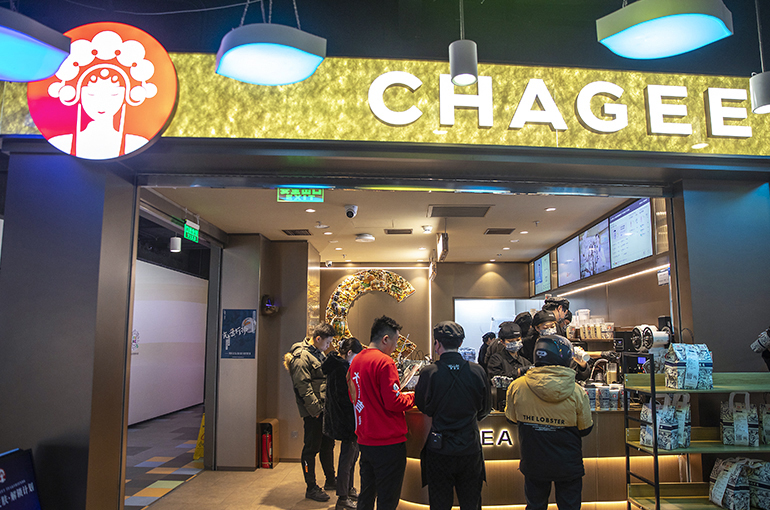
Mixue, known for its low-priced fresh fruit tea, milk tea, and soft-serve ice cream, opened a store in Hollywood, Los Angeles, on Dec. 20, located directly opposite the historic movie palace called the TCL Chinese Theatre on the Walk of Fame. Premium tea drink brand Chagee and mid-priced milk tea vendor Auntea Jenny also opened their first US stores in May, in Los Angeles and New York, respectively.
North America is one of the most challenging regional markets to develop, but it still offers substantial growth potential, a manager at a tea drink chain told Yicai. If a company’s business model can succeed in North America, its chances of succeeding in other regions will be significantly higher, the person noted.
If a company aims to become a global brand, it is more appropriate to start overseas expansion in markets with strong purchasing power, such as Europe and the United States, the manager said. Compared with previous years, Southeast Asia has become more crowded, making it a prudent choice for firms to select a new region as the first stop in overseas development.
Southeast Asia was previously the top choice for many Chinese new tea drink brands due to factors including its tropical climate, young population, and relatively high proportion of ethnic Chinese residents. Mixue opened its first overseas store in Hanoi, Vietnam, in 2018 and has since established about 4,700 stores across 13 countries. Other brands such as Chagee, Heytea, and Naixue have also expanded their presence in Southeast Asia.
The biggest challenge for Chinese tea drink brands going overseas is building a mature international supply chain, which is effectively equivalent to creating a new company abroad, industry insiders told Yicai.
Going global is not the task of a single company, Zhang Junjie, founder and chairman of Chagee, said. In Chagee’s view, a brand’s overseas expansion should involve the entire ecosystem and industrial chain, including supply chains, logistics, decoration, design, and dairy products.
Meeting the specific needs of overseas consumers is another major hurdle. “True internationalization occurs when overseas consumers become your users. If it attracts only Chinese people, that’s false internationalization,” Wang Huan, head of ChaPanda’s South Korea operations, told Yicai.
Despite these challenges, industry insiders remain optimistic about the overseas growth prospects of tea drink companies. Milk tea is becoming a new symbol representing China in the global market, and all segments of the milk tea industry chain have undergone comprehensive innovation and upgrading, said Yan Jianguo, chairman and chief executive of Saishang Dairy, which previously supplied dairy products to Luckin Coffee. He added that milk tea is likely to be accepted by more overseas consumers.
Editors: Tang Shihua, Emmi Laine