



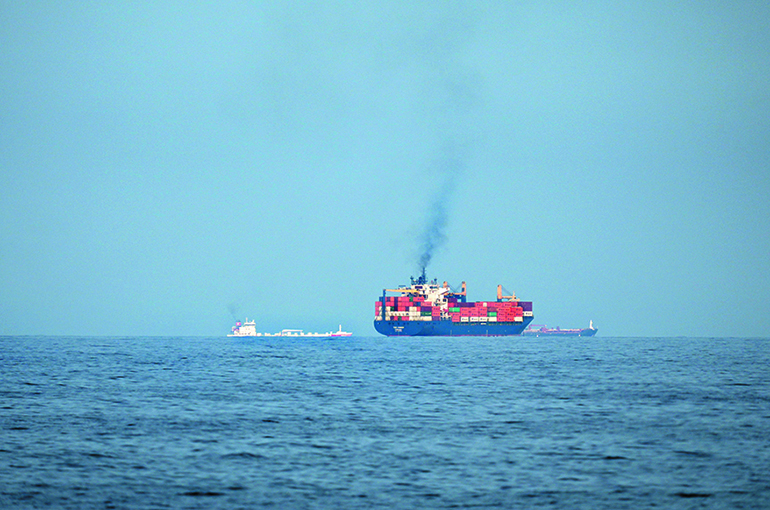
 Chinese Freight Forwarders See Mideast Business Slump, Shipping Rates Soar on Strait of Hormuz Closure
(Yicai) April 17 -- With trade through the Strait of Hormuz upended, Chinese freight forwarders have seen orders to the Middle East plunge, while shipping and insurance costs have surged.
Middle East business has at least halved due to the strait’s closure, Li Hao, sales manager at an international freight forwarding company based in Guangdong province, told Yicai. The firm has not experienced that kind of slump in more than 10 years, he said.
While demand for non-essential consumer goods has shrunk, that for essential goods, such as daily necessities and basic building materials, remains strong, Li pointed out.
As a result, many consumer goods factories in Yiwu, the Chinese city known as the world’s small commodity capital, are facing a shortage of orders. “In the past month, some businesses have seen their orders from the Middle East drop by 50 percent compared with the same period last year, said Xu Yan, president of the Yiwu Cross-Border E-Commerce Association.
Although the shipping lines Li’s company works with come from all around the world, they are now making the same adjustment: redirecting cargo from China to the Middle East through ports such as Khor Fakkan and Fujairah in the United Arab Emirates, so as to avoid the conflict zone and keep shipments moving.
Leading carriers, including Mediterranean Shipping, Maersk, and CMA CGM, have suspended or altered their Middle East services, sending freight rates and insurance premiums sharply higher, while many vessels are stuck in the Persian Gulf.
Freight forwarders interviewed by Yicai said sea-to-land transport via the UAE has become one of the main alternative routes for Chinese goods bound for the Middle East, but it is costly, slow, and regularly hampered by port congestion. The clearest effect so far is a steep rise in the cost of moving Chinese exports to the region.
Shipping a standard container from Shanghai to the Middle East previously cost around USD3,000 to USD4,000, said a manager at a large Chinese freight forwarder surnamed Chen. It is now USD5,000 to USD6,000, rising to as much as USD11,000 with surcharges, he noted.
Chen said the surge in freight rates has two main causes: higher global crude oil prices, which pushed up transport costs directly, and war-related uncertainties, which are driving a growing list of extra charges.
According to data from shipping companies, they are passing most of the extra cost on to their customers, putting even more pressure on merchants, who are already contending with a lack of orders.
Exporters and freight forwarders need to assess in advance the knock-on effects of port changes, detours, trans-shipment, and rising surcharges in order to lower risk, according to industry insiders. They added that closer coordination with shipping lines and agents, larger logistics budgets, and more flexible delivery plans are now essential for navigating the shipping crisis and limiting losses.
Editor: Futura Costaglione