



 Chinese Banks Start Charging for SMS Alerts Amid Net Interest Margin Squeeze, Higher Costs
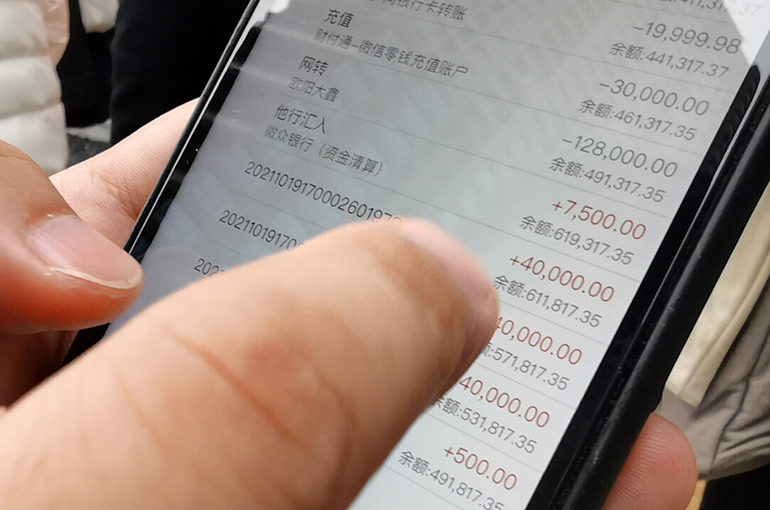
(Yicai) Feb. 11 -- Against a backdrop of shrinking net interest margins and rising operating costs, some Chinese banks are making SMS notifications for lower transactions a paid service.
China Merchants Bank will stop sending free SMS alerts for transactions below CNY5,000 (USD725) from March 16, the Shenzhen-based lender recently announced. To keep enjoying the service for lower amounts, customers will have to pay a monthly fee of CNY3 (43 US cents).
More than 10 other large and medium-sized banks, including Bank of China, as well as several rural commercial banks have also announced they will charge monthly fees for SMS transaction notices, Yicai calculated based on incomplete statistics. They generally set the free/paid threshold at between CNY100 and CNY500 (USD15 and USD72), much lower than for China Merchants Bank.
SMS alerts for account activity are not a legally mandated basic service, so charging for them is a market-based practice that regulators permit, Dong Ximiao, chief researcher at Merchants Union Consumer Finance and deputy director of the Shanghai Institute for Finance and Development, told Yicai.
Even though the cost per SMS text message is low, it adds up when the customer base is large and the frequency of alerts is high, making it a financial burden lenders are eager to reduce.
A bank with 100 million personal accounts likely pays CNY3 million (USD434,000) per month to mobile network operators, if each account receives just one free SMS text for a small transaction costing the bank 3 Chinese cents (0.43 US cent), according to industry estimates. That adds up to more than CNY36 million (USD5.2 million) a year.
Net interest margins -- the difference between the interest a bank earns on its loans and investments and the interest it pays on deposits and other funding -- have been contracting in recent years. So even expenses once regarded as minor have become a focus of cost-cutting efforts.
“If a lender charges CNY3 per month, and most customers receive fewer than 100 SMS a month, that fee will essentially cover the cost, and may even contribute to system maintenance, risk control, and management overheads,” a banking industry source told Yicai.
Beyond cost recovery, the change will also nudge customers to use zero-cost digital channels such as bank apps and WeChat official accounts, according to Lou Feipeng, a researcher at Postal Savings Bank of China.
“By migrating transaction and payment alerts to mobile banking apps and WeChat, banks can increase customer engagement with their digital platforms, which in turn drives greater adoption of integrated services such as account management and wealth allocation,” said Yang Haiping, a researcher at the Shanghai Institute of Finance and Law.
The banking industry will eventually adopt a model where free SMS alerts are kept for large transactions, while notifications for small transactions are sent by default via apps or WeChat, Lou predicts. Fully free SMS services will only be provided to designated groups, such as high-end clients and elderly customers, who are less familiar with apps.
Editors: Tang Shihua, Futura Costaglione