


 China’s CAS Space Sends AI Computing Power Satellite Into Space
(Yicai) Sept. 21 -- CAS Space Technology, a commercial space firm incubated by the Chinese Academy of Sciences, has launched into orbit an artificial intelligence computing power satellite capable of processing acquired information in real time to explore the deployment of computing power infrastructure in space.
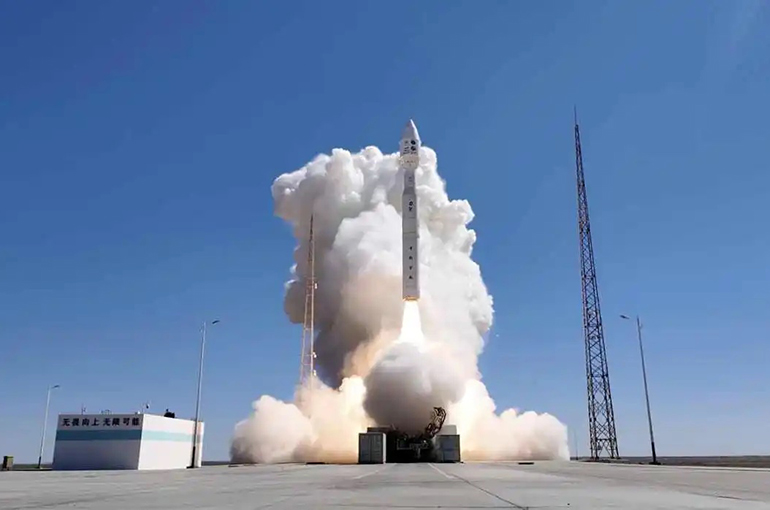
The Lijian-1 Y18 carrier rocket launched yesterday from the Dongfeng Commercial Space Innovation Test Zone at the Jiuquan Satellite Launch Center in Northwest China, sending S· AIDC-1 and eight other satellites for space environment monitoring, disaster prevention and mitigation, and scientific experiments into their designated orbits, Guangzhou-based CAS Space announced yesterday.
Developed by Chinese computing power provider S· AIDC, S· AIDC-1 carried a remote sensing camera and an AI computer. It features optical remote sensing imaging, in-orbit data processing, and target recognition capabilities intended for applications in smart cities, natural resource surveys and supervision, precision agriculture, ecological environmental protection, and emergency disaster relief.
Compared with traditional remote sensing satellites, S· AIDC-1 can perform image analysis and target identification in space and then transmit processed, high-value information to the ground, reducing data response times from hours to minutes, according to CAS Space.
The launch was the 17th of the Lijian carrier rocket series, which has sent one spacecraft and 121 satellites into space so far, with a total payload mass exceeding 21 tons. The Lijian series has many orders on hand, with launches planned for the second half of next year.
CAS Space is the private Chinese commercial space company that launched the most satellites and carried the heaviest payload, the company noted, adding that it will complete Lijian-1’s first maritime launch soon, forming a coordinated land-sea launch service capability.
Coordinated sea-land launch services can broaden mission adaptation boundaries and respond efficiently to diverse commercial space needs, including constellation networking, CAS Space said. In the future, the company will collaborate with partners in AI, biomedicine, and other fields to explore more ways to integrate commercial aerospace with emerging industries.
Editors: Dou Shicong, Futura Costaglione