


 China to Add New Robot Tariff Categories to Boost High-Tech Trade
(Yicai) Dec. 31 -- China will create several new import and export tariff categories related to robots from tomorrow in order to better serve the trade of high-tech products.
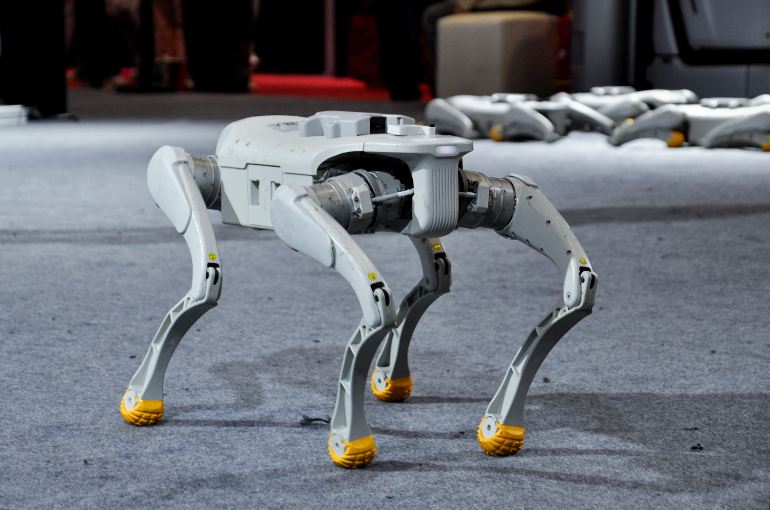
Next year, China will add a new tariff category for intelligent bionic robots, with a most-favored-nation rate of 0 percent and a general rate of 30 percent. Two new categories for different types of cleaning robots will also be established, with MFN rates of 8 percent and 0 percent, and general rates of 130 percent and 30 percent, according to the latest tariff adjustment plan released by the Customs Tariff Commission of the State Council.
The addition of these robot-related tariff items will help companies and industries track trade data more accurately, analyze overseas market trends and develop effective strategies, Li Yanxia, chief engineer of the China Machinery Industry Federation, said in an interview with state broadcaster China Central Television.
To support tech development, the development of a circular economy and the forest-floor economy, China will create tariff categories for bionic robots, bio-aviation kerosene, forest-grown ginseng and other products, the commission said. After the adjustments, the total number of tariff items in China will rise to 8,972.
The tariff adjustment plan defines intelligent bionic robots as autonomous or semi-autonomous machines that closely mimic humans or animals in appearance, structure, or function. These robots can perceive their environment through devices such as cameras, sensors and LiDAR. They rely on artificial intelligence, machine learning, and computer vision to navigate and avoid obstacles. Some models even integrate natural language processing and emotional computing to communicate and respond to humans.
In addition, to support industrial upgrading and green transformation, China will implement provisional import tariffs lower than the MFN rate on 935 items next year. These include key components such as CNC hydraulic press cushions, specialized composite connectors as well as resource-based items like recycled black powder for lithium-ion batteries and unroasted pyrite, according to the plan.
Editors: Dou Shicong, Kim Taylor