



 China Lays Out 15-Year Roadmap for Hydrogen Sector Aiming for More Innovation, Better Foundation
(Yicai Global) March 24 -- China set out a 15-year plan yesterday for the development of the country’s hydrogen energy industry to overcome shortcomings such as weak technology reserves, insufficient regulation and a lack of skilled labor that are holding back the sector as China gears up to meet its carbon peaking and neutrality goals.
Independent innovation, a better industrial foundation and the building up of technology reserves were all addressed in the Medium and Long-Term Plan for Hydrogen Energy Industry Development (2021-2035) released by the government yesterday.
The further improvement of hydrogen energy policy and more pragmatic development goals will help bolster the country's hydrogen fuel industrial chain and lead to the formation of more industry leaders, just as happened in the lithium battery sector, industry insiders said.
The main factor holding the hydrogen fuel cell industry back is high costs, as some equipment and raw materials need to be imported, said Xiang Hong, the general manager of a hydrogen fuel vehicle firm. It will take at least two to three years to localize the whole industrial chain. Once key materials such as catalysts can be produced locally, the cost will drop a lot.
"Compared with the electrochemical power cell sector, China's hydrogen fuel cell industry is weaker in terms of technology reserves, industrial foundations and skilled talent,” said Ouyang Minggao, academician of the Chinese Academy of Sciences and professor at Tsinghua University. “The government needs to establish a hydrogen energy innovation platform as soon as possible, promote core research and talent cultivation and build a self-reliant and self-improving science and technology system," he added.
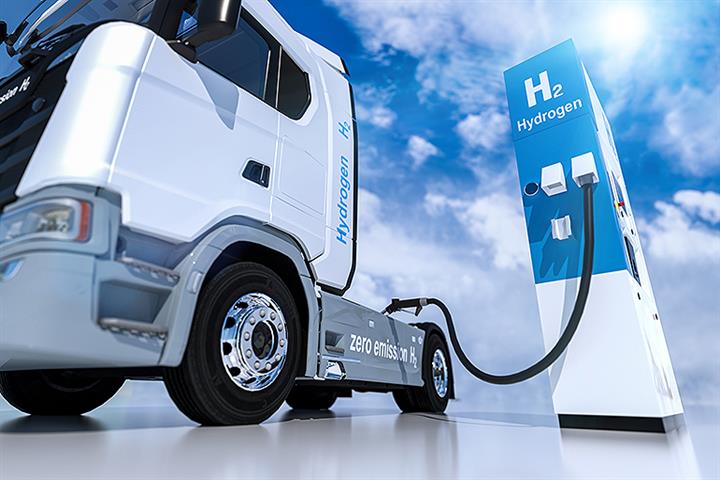
Hydrogen-powered vehicles can start in low or high temperatures, can carry heavy loads, are pollution free and can be refueled as quickly as fossil fuel-powered autos making them more suitable for long-distance transport than electric ones and a popular choice as delivery vehicles and passenger carriers, Xiang said. The refueling network also needs to be improved, he added.
But it will take time for the hydrogen-fuel sector to become more cost efficient through economies of scale, insiders said. Hydrogen-powered commercial vehicles are only expected to reach a penetration rate of over 1 percent by 2025.
China is likely to be a leader in the development of hydrogen fuel heavy-duty trucks. In 2020 it accounted for 68.3 percent of the world’s production of all heavy-duty trucks at 2.98 million units.
Editor: Kim Taylor