




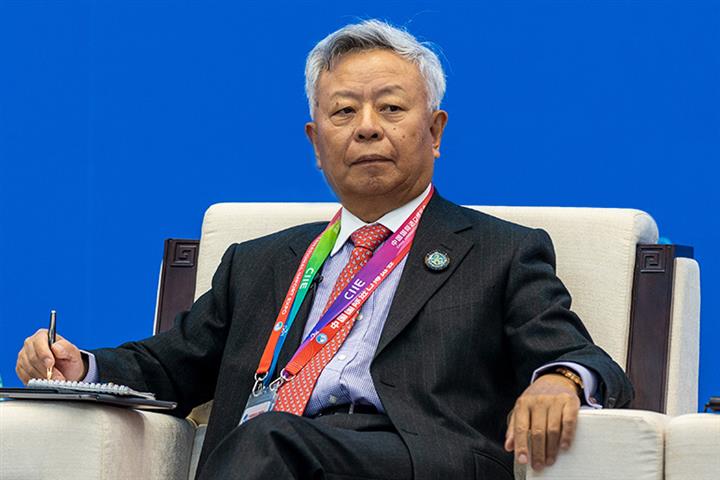
 Blaze New Post-Covid Digital Technology Investment Paths, AIIB President Urges
(Yicai Global) Jan. 14 -- Exploring new investment channels, above all in the application of digital technology, will be necessary in the post-pandemic era, Jin Liqun, president of the Asian Infrastructure Investment Bank, responded to Yicai Global's question at a briefing yesterday. To mobilize the private sector to invest in infrastructure amid fiscal pressure on governments is also important, he added.
Major infrastructure trends that will impact Asia’s economic recovery after Covid-19 recedes after green and social infrastructure, asset recycling/privatization, technology-driven infrastructure, connectivity and regional cooperation, the Beijing-based AIIB said yesterday.
Though infrastructure projects have begun to use new technologies and ideas, many developing countries have been slow to apply innovative technologies from a lack of understanding of their uses in industry and infrastructure, the AIIB stated. Thus, 64 percent of infrastructure stakeholders cited deficient comprehension as the main bar to the adoption of appropriate technologies. The Covid-19 pandemic, however, has instilled a prompt awareness of the broad applications of technology.
The AIIB may further raise its investment in response to the coronavirus epidemic this year, Jin said. “We may need to increase our funding arrangements [to handle] Covid-19, because the demand for vaccines will be very high since many countries have [insufficient capacity] in inoculant supply. The production capacity of shots in China, the United States and some European countries will grow so fast that they may be able to meet the demand in their countries in just over six months. In that case, there will be enough vaccines to support countries that cannot produce them, mainly low-income countries. So we have prepared funds to support those countries as well,” he added.
Going Green
The AIIB aims to boost the share of climate funds in approved financing to 50 percent by 2025, and the share of cross-border connectivity projects to between 25 percent and 30 percent of all projects by 2030, it said. It also hopes the private sector will lead half of them by then.
To mobilize private capital, some high-return and high-quality projects should be considered for investment even if outside the conventional operating scope and comfort zone of multilateral development banks, the AIIB stated.
Countries will have to grapple with the recession wrought by the epidemic, including mass bankruptcies, rising unemployment and high debt. Long-term investors value financial security when investing in infrastructure, making it difficult for economies facing heavy debt and weaker institutions to attract investment, the bank said.
Asset recycling or privatization are possible options for governments under fiscal pressure. The top priority for multilateral development banks is to continue to work with the private sector to mobilize much-needed investment, spur recovery and lower public debt, the bank noted.
The AIIB is a multilateral development bank which seeks to advance Asia's economic and social progress. It now has 103 members and 21 hopefuls from around the globe.
Editor: Ben Armour, Xiao Yi






