



 Beijing’s Office Vacancy Rate Rises Despite Uptick in Demand for Warehouse Spaces
(Yicai Global) April 12 -- The demand for office space in the Chinese capital of Beijing slowed in the first quarter resulting in an increase in the vacancy rate, but the leasing out of warehousing facilities to logistics providers has jumped significantly with the rebound in consumption, according to the latest data.
The vacancy rate of office buildings in Beijing climbed 0.5 percentage point in the first three months from the previous quarter to 16.8 percent, according to a report released by the China arm of UK real estate service provider Savills’ research division. This was a 1.5 percentage point increase from the same period last year.
And monthly rents have tumbled 1.3 percent quarter on quarter and 5.1 percent year on year to an average of CNY321.70 (USD46.70) per square meter, it said.
However, the increased demand for warehousing facilities is helping to counter the rise of the vacancy rate, according to US commercial real estate market researcher CBRE Group’s China division.
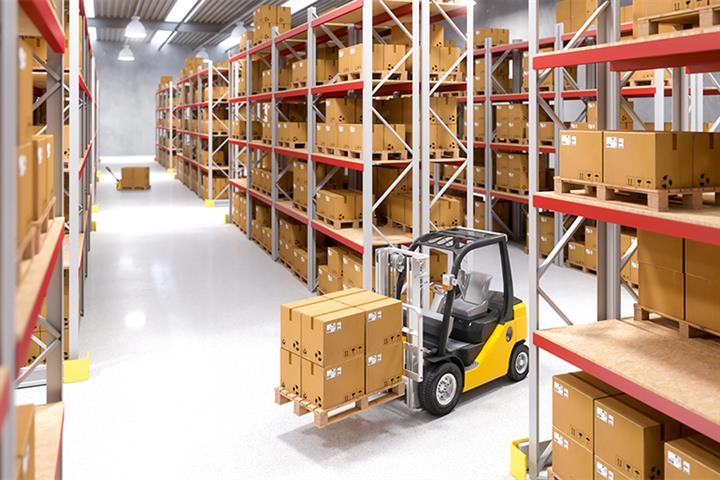
In the first three months, logistics firms accounted for 43 percent of newly added rental area, amounting to 87,000 square meters. This helped drag down the vacancy rate by 0.8 percentage point from the previous quarter to 15.6 percent, and to spur the average monthly rent by 0.5 percent to CNY56.90 (USD8.30) per square meter, said Dallas-based CBRE.
Lessees are still quite capable of bargaining for cheaper prices and better services because of the glut of land available for warehousing and logistics in Beijing and the neighboring cities of Langfang and Tianjin, said Li Hong, executive in charge of CBRE’s department of industry and real estate in northern China.
However, the leasing out of premium office space in the capital is still difficult and it does not have sufficient momentum yet to stage a recovery, said Li Xiang, director of Savills’ research division for northern China.
Over 570,000 square meters of office space is expected to be added to Beijing’s corporate space market this year, yet demand will vary depending on how different sectors recover, Savills’ Li Xiang said. Therefore, more time is needed for market confidence and leasing demand to rebound.
But demand is improving. “During the first quarter, there was a noticeable jump in the number of clients visiting office buildings in Beijing,” said Li Xiang. This indicates that many companies are looking for new spaces.
Despite the signs of recovery, however, owners of office buildings in Beijing are not in a position to bargain hard on rents as the demand for new rentals, relocation and expansion is not being fully unleashed while the occupancy rate stays low, the Savills report said.
Editors: Tang Shihua, Kim Taylor